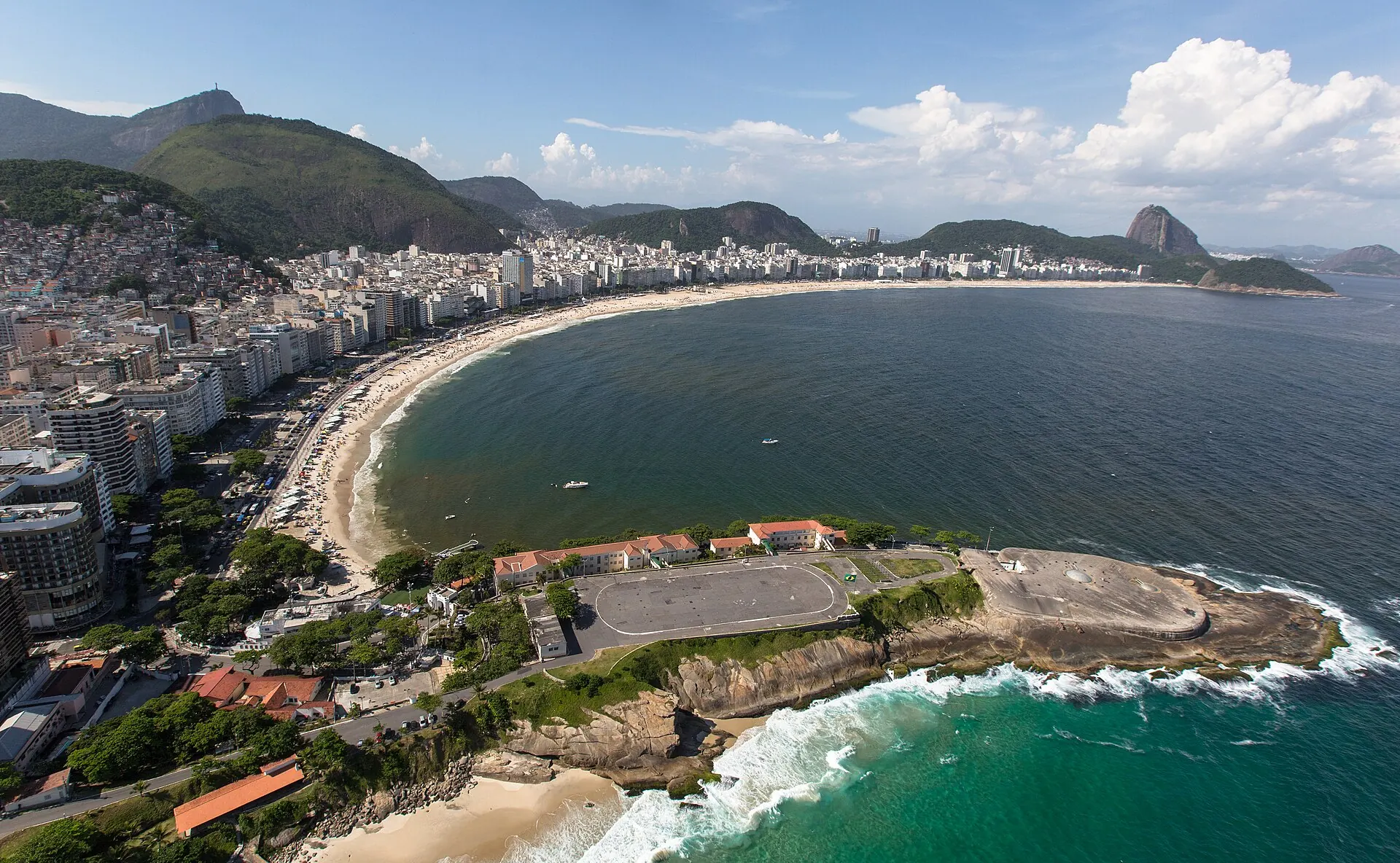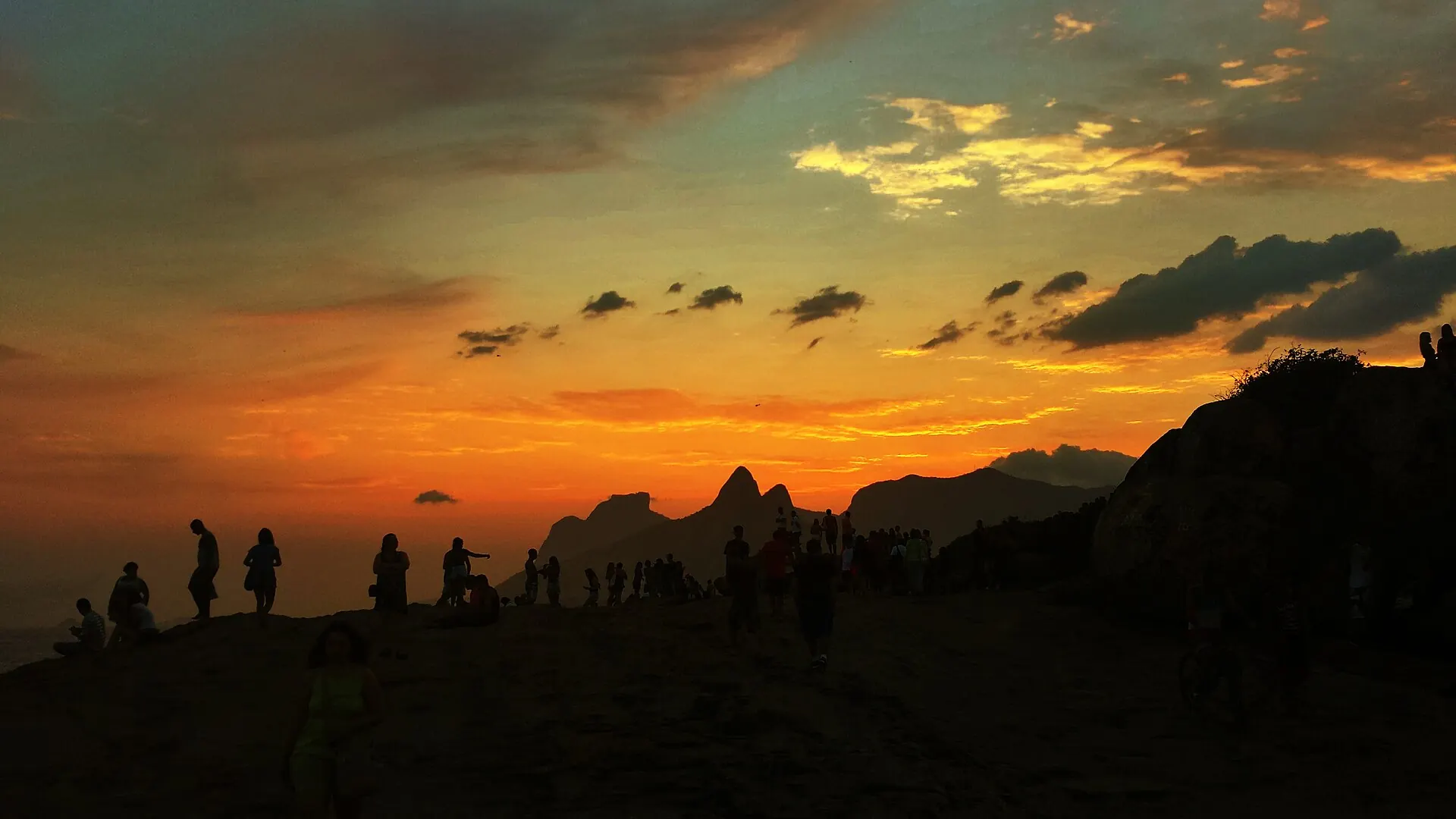
Arpoador is the rocky point between Copacabana and Ipanema, just past the walls of the Forte de Copacabana. The name means harpooner, from the days when whales were harpooned close to this shore. In the late afternoon its big rock, the Pedra do Arpoador, fills with people who come to watch the sun go down with the Dois Irmãos hills in silhouette, and to clap when it disappears. Come back in the morning and it's a different place: swimmers off the beach, surfers in the water off the point and, just round the corner at Posto 6, the fishermen bringing in their boats.
- Where
- The point between Copacabana and Ipanema, past the Forte de Copacabana
- Best for
- Sunset on the rock, summer swims, surfing, the fishing boats at Posto 6
- Praia do Diabo
- Small beach between the rock and the fort, popular with surfers
- Park
- Parque Garota de Ipanema, opened in 1968 and renovated in 2023
- From Copacabana
- Walk to Posto 6, then follow Rua Francisco Otaviano past the fort
Sunset on the Pedra do Arpoador
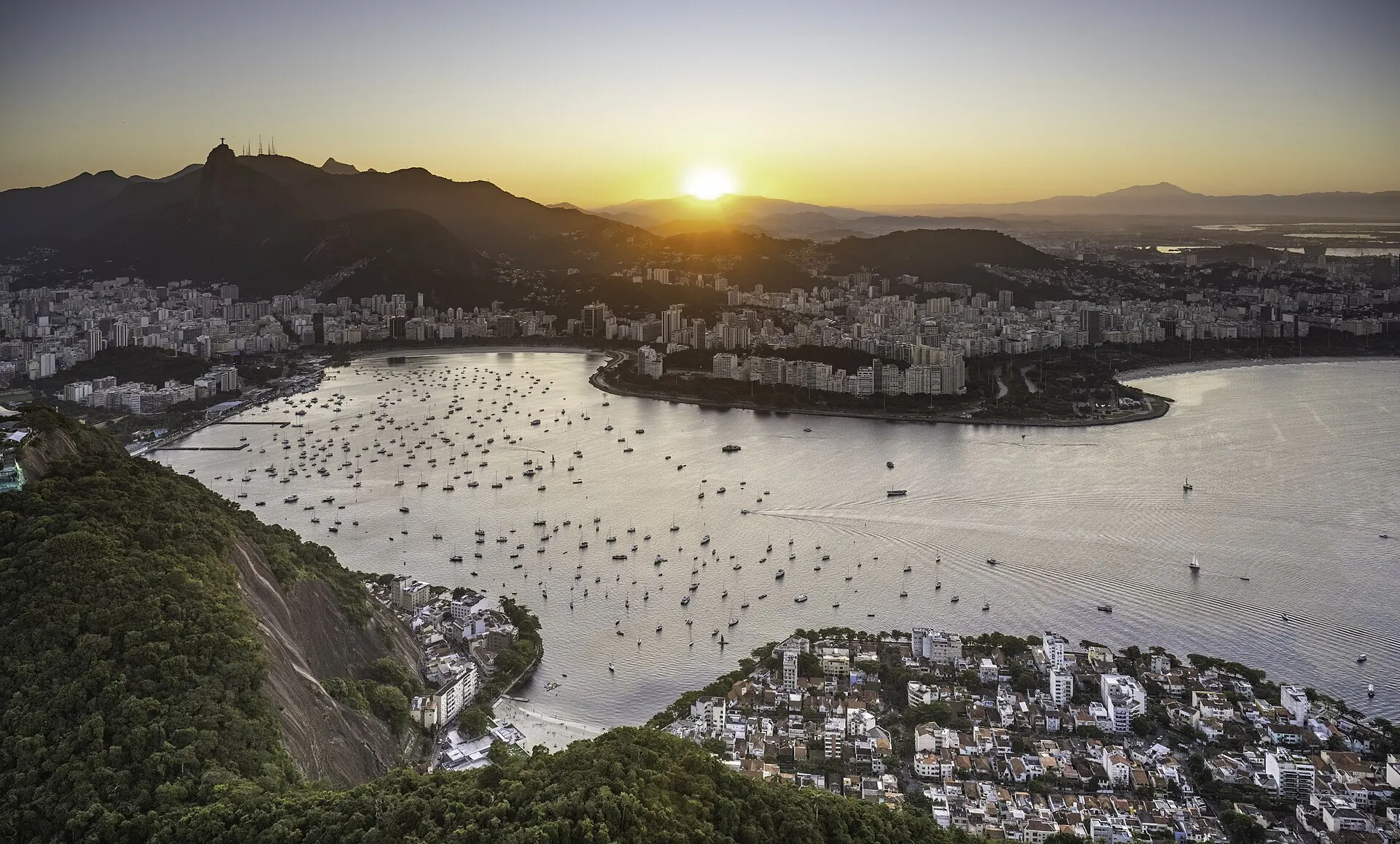
This is Rio's most photographed and most applauded sunset. As the sun goes down, the crowd on the rock claps, a summer habit that has become a tradition. You watch it with gold light on the water, the Dois Irmãos hills and the Pedra da Gávea in silhouette in the distance and the long curve of Ipanema and Leblon in front of you.
Arrive early to choose your spot, especially on summer weekends, when the rock fills up well before sunset. Wear shoes with some grip for the climb, carry your phone where you can feel it, and buy a cold drink from a beach vendor on the way. Stay a little after the applause, as the sky over the hills often holds its colour for a while. If the rock is packed, try the fort next door: after the museum, find a spot in its outdoor area, which faces the coast. The fort normally closes at 7pm and stays shut on Mondays.
Mornings on the rock and in the water
Mornings are the other good time to come. The rock is quiet, and swimmers head into the sea below it. Praia do Arpoador itself is about 800 metres long, a favourite with Cariocas and visitors alike for the view. In summer the water here often turns calm and warm, almost like a pool, and so clear that it's been compared with the Caribbean; on many days you can see small shoals of fish close to the shore. The rock also gives some shade by day, which has long made this corner a meeting point: one group of friends, the Pinguim do Arpoador, has met here for decades. Our beach and promenade guide explains the lifeguard posts and what each flag colour means.
Praia do Diabo
Between the Arpoador rock and the walls of the Forte de Copacabana is Praia do Diabo, the Devil's Beach: a narrow strip of sand lined with coconut palms. It got its name from its rough sea, which is exactly what draws the surfers, so treat it as a beach for watching rather than swimming. Sit on the sand and watch them ride, or look down on it from a table at one of the fort's two cafés, Confeitaria Colombo's branch or Café 18 do Forte.
Surfing at Arpoador
The first signs of surfing in Rio go back to the 1940s and 1950s, when Cariocas were already riding the waves off Arpoador on improvised wooden boards. The sport got organised in the 1960s: the Federação Carioca de Surfe was founded in 1965 and ran the first competitions, and that same year São Conrado Surfboard, Brazil's first surfboard factory, opened in Rio and introduced fibreglass boards. Since the 1970s Rio has hosted stages of the world surfing championship, and Arpoador has been one of the venues. In August 2024 the city council voted to make surfing part of Rio's intangible cultural heritage. Surfers come out here in summer and winter, and on most days you'll see them waiting for sets off the point while people watch from the rock. If you'd like to try it, the Art de Vivre concierge knows surf guides and can book one.
Parque Garota de Ipanema
Behind the beach is the Parque Garota de Ipanema, opened in 1968 and named after Tom Jobim and Vinicius de Moraes's song, known in English as The Girl from Ipanema. The city reopened it in October 2023 after a renovation that restored the gardens and low walls, gave the children's playground a new surface and new play equipment, and refreshed the music arena and the skating rink. It's the easiest place near the rock for small children to run about while you wait for sunset.
Posto 6 and its fishermen
Just round the corner on the Copacabana side, the fishermen of the Z-13 colony work from the sand beside the fort. Fishing here is far older than the colony's official founding in 1923: in the 17th century this end of the beach was known as the Praia das Pescarias, and an 1895 photograph by Marc Ferrez already shows canoes here. In 2019 the colony counted about 40 fishermen and 20 motor boats, and in 2023 it marked its centenary. They head out while it's still dark, rolling the boats down to the water over wooden logs, and sail for about an hour to reach their nets, one of them 800 metres long, before bringing back corvina, bigeye, anchovy, pescada and snook. Many of them live in Pavão-Pavãozinho, Cantagalo, Rocinha and Vidigal.
Most of the catch has long been sold at the colony's own fish market beside the fort, mainly to people who live nearby. Come in the morning to watch the boats come in and see the market at work; if you're cooking at home, ask what came in that day.
Walking to Arpoador from Copacabana
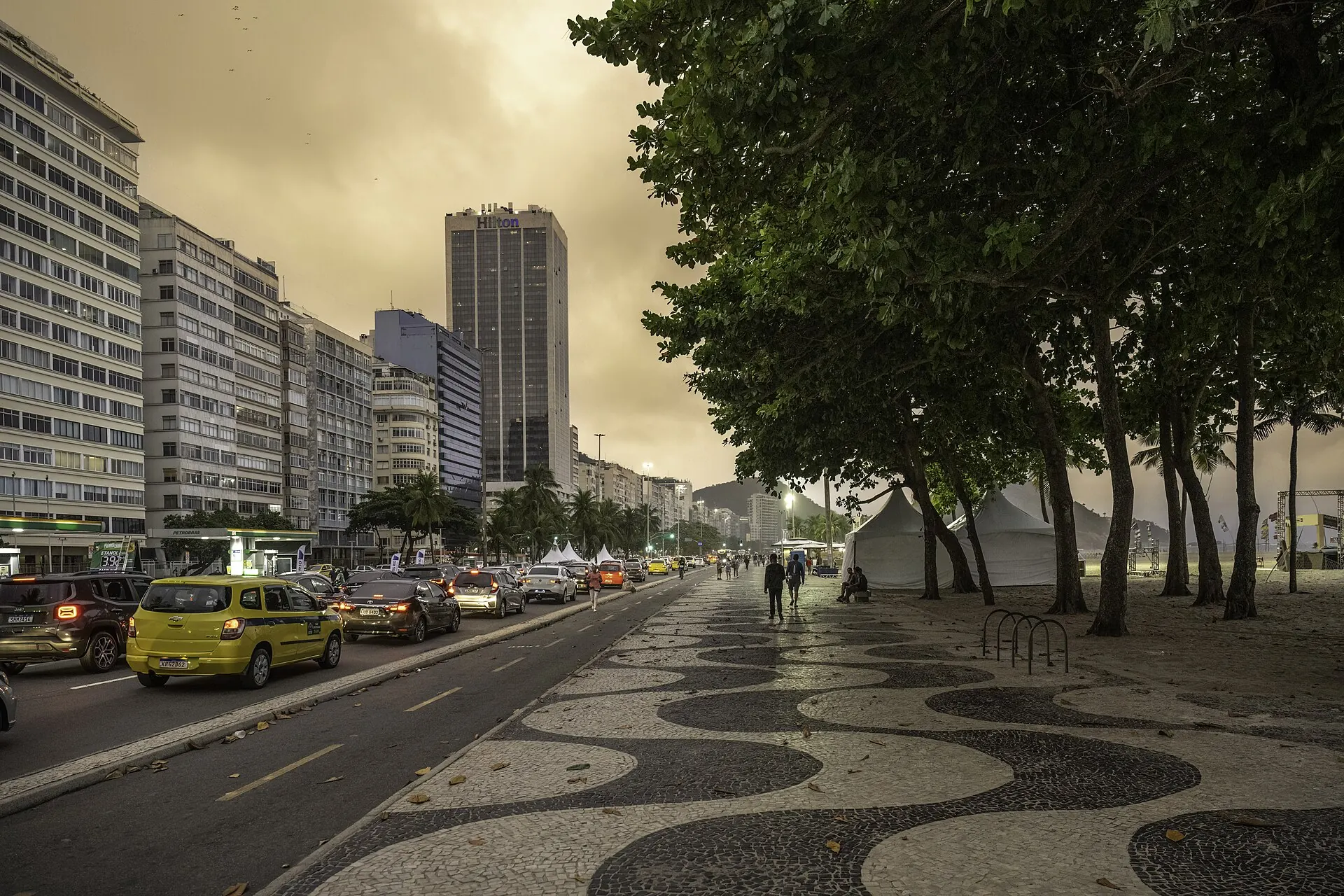
From anywhere on Avenida Atlântica, walk south along the promenade to Posto 6, where the beach ends. The fort blocks the way along the sand, so turn inland and follow Rua Francisco Otaviano past its walls; it brings you out at Praia do Diabo and the Parque Garota de Ipanema, with the rock straight ahead. It's a flat, easy walk. The seafront is busy day and night, so the walk back along Avenida Atlântica after sunset is easy; a taxi or ride app works too. Pair it with a morning at the Forte de Copacabana, or begin at the other end of the beach in Leme and make a day of it.
A day around the rock
For a full day around the point, start with the fishing boats at Posto 6, then visit the fort, which usually opens at 10am from Tuesday to Sunday, and have coffee at one of its cafés above Praia do Diabo. Entry was R$ 10 in 2024, free on Tuesdays and paid in cash, so carry a few notes and check the current price. Spend the middle of the day on the sand at Arpoador or along Ipanema, let the children run in the Parque Garota de Ipanema in the afternoon, and climb the rock in good time for sunset. For more lookouts across the city, see Rio's best viewpoints, and if you'd like help planning your days in Rio, get in touch.
Questions
Do people really clap at sunset at Arpoador?
Yes. As the sun goes down, the crowd on the Pedra do Arpoador applauds, a summer habit that has become a Rio tradition.
When should I get to the Pedra do Arpoador for sunset?
Check the day's sunset time and arrive well before it, because the rock fills up, especially on summer weekends. Stay a few minutes after the applause for the colour over the Dois Irmãos hills.
Can you swim at Arpoador?
Yes, and summer is the best time, when the sea here is often calm, warm and clear, almost like a pool. Mornings are the quietest. Swim near a lifeguard post and go in only where the flags allow.
How do I walk from Copacabana to Arpoador?
Head south along the promenade until the sand runs out at Posto 6, then follow Rua Francisco Otaviano along the fort's walls. It brings you out at Praia do Diabo and the Parque Garota de Ipanema, right by the rock.
Can I buy fish from the Posto 6 fishermen?
Yes, in the morning, when the boats come in. The Z-13 colony has long sold most of its catch at its own fish market beside the fort, mainly to people who live nearby, so ask what came in that day.
Sources
- Rio Film Commission (Prefeitura do Rio): Arpoador Beach
- Rio Film Commission (Prefeitura do Rio): Praia do Diabo
- Agência Brasil: Parque Garota de Ipanema reopens after renovation (October 2023)
- Agência Brasil: Praia do Arpoador in summer, the applauded sunset (December 2015)
- CBMERJ: World Drowning Prevention Day safety tips (2025)
- Guia Michelin: Rio's sunset spots, Pedra do Arpoador (April 2024)
- Super Rádio Tupi: surfing and Rio's intangible heritage bill (August 2024)
- National Geographic Brasil: the last fishermen of Copacabana, Colônia Z-13 (2019)
- SBT News: the Posto 6 seafront, the fishing boats and the fish market (October 2023)
- Visit Rio: Forte de Copacabana and its two cafés (updated May 2026)
- Catraca Livre: Forte de Copacabana, hours and cafés (updated July 2024)
- Rio Film Commission (Prefeitura do Rio): Copacabana Beach