Petrópolis is the mountain town where Brazil's emperors spent their summers. It sits at 809 metres, about 70 km from Rio up the BR-040, so the air is cooler than on the beach and the climb up the Serra is part of the day. Most of what you came for is in the historic centre: Dom Pedro II's palace, now the Museu Imperial, with his crown; the neo-Gothic cathedral where he is buried; the cast-iron Palácio de Cristal; and the summer house of the aviation pioneer Alberto Santos Dumont. Add the old hotel-casino at Quitandinha on the way out of town and you have one of the easiest full days out of Copacabana.
- Distance
- About 70 km from Rio by road, on the BR-040
- Drive
- About an hour with clear roads
- Altitude
- 809 metres
- Best days
- Tuesday to Sunday; most museums close on Mondays
- Museu Imperial
- Tuesday to Sunday, 10am to 6pm; R$ 10, free on Sundays (2026)
- Best as
- A full day; stay longer for a hike in the Serra dos Órgãos
Getting there from Copacabana
Petrópolis is about 70 km from Rio by road, a little more from Copacabana. You take the BR-040 towards Petrópolis, a toll road run by CONCER, and climb the Serra; at the top, take the Quitandinha entrance into town, which also leads to the centre and the Museu Imperial. With clear roads the drive takes about an hour. Rio's own traffic at either end is the slow part, so leave Copacabana early and aim to be heading back down before the evening rush.
Buses run by Única Fácil and Útil, among others, go to the Petrópolis bus station, and the ride takes about an hour and a half. For a day of sightseeing a car with a driver is simpler: the sights are spread between the centre and Quitandinha, and you'll want to stop on the way back. Art de Vivre's concierge runs a 12-hour Petrópolis day with transport from Copacabana, a guide and lunch, and can add the wax museum or the Bohemia brewery.
The Museu Imperial
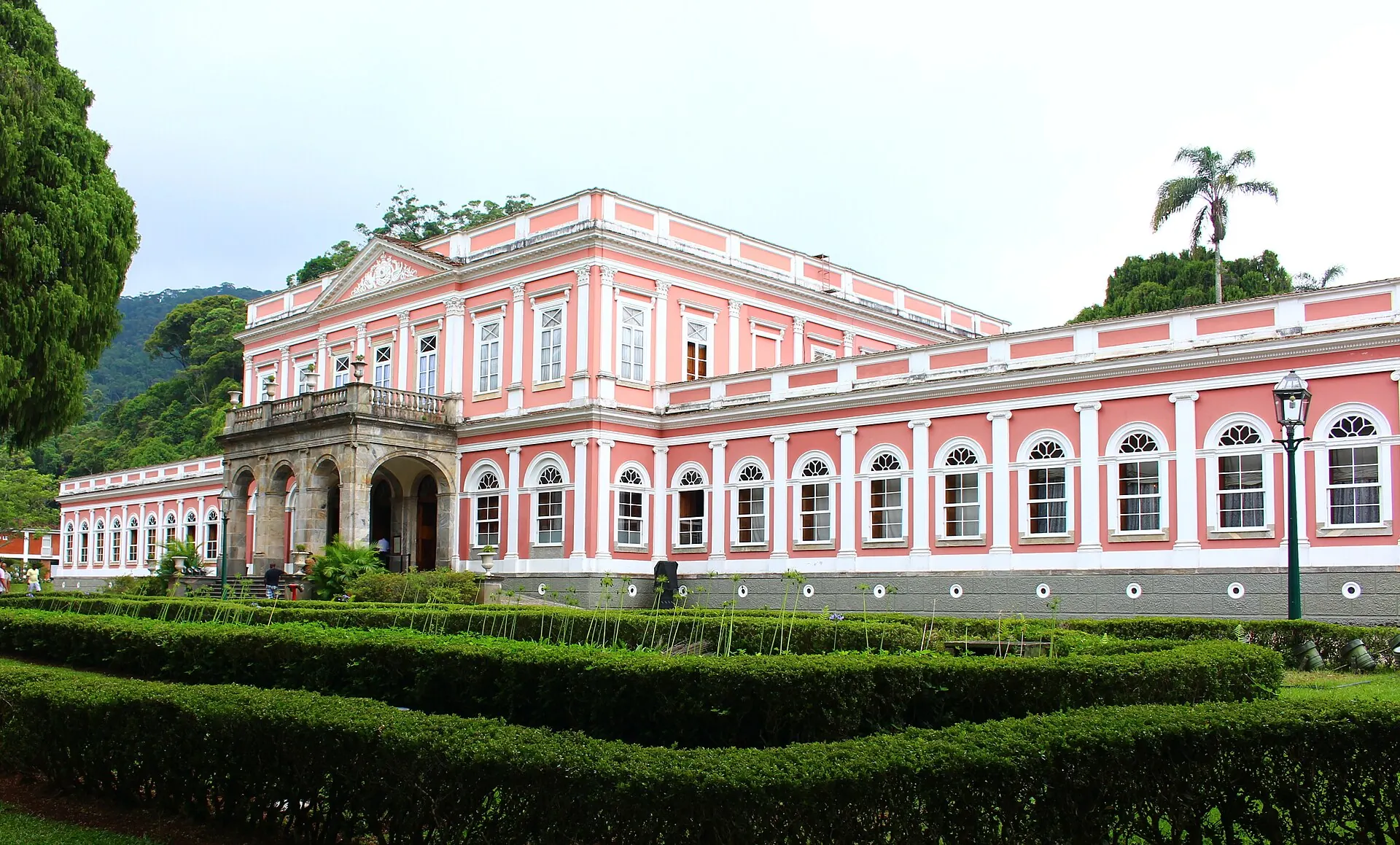
The palace was Dom Pedro II's summer residence, and the story starts with his father. In 1822 Dom Pedro I passed through these mountains on his way to Minas Gerais, and in 1830 he bought the Fazenda do Córrego Seco for 20 contos de réis, meaning to build a palace there one day. His son signed the decree creating Petrópolis on 16 March 1843. Major Julius Friedrich Koeler, an engineer, led the mostly German immigrants who founded the town and built the palace. Work ran from 1845 to 1862, paid for from the emperor's own funds, and Koeler's design was finished by others after his death; Jean-Baptiste Binot laid out the gardens in the 1850s.
After the Republic was proclaimed in 1889 the imperial family went into exile, and the palace spent nearly half a century as a school. Getúlio Vargas created the Museu Imperial by decree on 29 March 1940, and it opened on 16 March 1943, a hundred years to the day after the town's founding decree.
Inside, you walk in felt slippers, the famous pantufas, which protect the original floors. The collection runs to nearly 300,000 items, and its centrepiece is Dom Pedro II's imperial crown. For the celebrations of the emperor's bicentenary, the museum reopened the room with the Traje Majestático, the ceremonial dress worn at official imperial ceremonies. Outside, the Pavilhão das Viaturas holds 19th-century carriages, and one of the courtyards displays a locomotive that climbed the mountain in the early 20th century.
Museu Imperial tickets and hours
- Open: Tuesday to Sunday, holidays included; closed on Mondays, 1 May, Christmas Day and New Year's Day.
- Palace: 10am to 6pm, last entry at 5.15pm. The ticket office opens from 9.30am to 5pm.
- Gardens: from 7am; the gates stop letting people in at 4.45pm and the gardens close at 6pm.
- Tickets: R$ 10, or R$ 5 half price, in 2026, paid in cash or by Pix only, so carry reais. Half price covers people over 60 and young people up to 21, among others.
- Free: everyone on Sundays, plus children under 5 and visitors over 80.
- Access: a separate entrance with a ramp for wheelchair users and anyone who finds steps hard.
- Address: Rua da Imperatriz 220, Centro.
The palace also has a sound-and-light show on Friday and Saturday evenings at 7pm, with adult tickets at R$ 20. It has been paused for technical reasons since April 2026, and the museum will announce its return on its official site.
The cathedral and the imperial tombs
The Catedral São Pedro de Alcântara is the neo-Gothic cathedral of the historic centre, on the street of the same name, and its best-known corner is the mausoleum of the imperial family. Dom Pedro II and Empress Teresa Cristina lie here, with Princess Isabel and the Count d'Eu.
Entry is free, and the cathedral usually opens every day from 8am to 6pm. It's a working church, so visit quietly during Mass. Rua São Pedro de Alcântara 60, Centro.
Santos Dumont's house
Alberto Santos Dumont, the man Brazilians call the Father of Aviation, spent his summers in a house on Rua do Encanto that earned the nickname A Encantada, the enchanted one. It's now the Museu Casa de Santos Dumont, with his belongings inside and an annex about his 14 Bis aeroplane. The steps at the entrance are the detail everyone remembers: they're cut so that you can only climb them starting with your right foot.
The house usually opens Tuesday to Sunday from 9am to 5pm, and entry costs a few reais, around R$ 8 for a full-price ticket; check the price on the day. Rua do Encanto 22, Centro.
The Palácio de Cristal and Avenida Koeler
The Palácio de Cristal is a prefabricated cast-iron hall that the Count d'Eu ordered from a French foundry. The engineer Eduardo Bonjean assembled it, and it opened in 1884 to house the region's horticulture and bird shows. In April 1888 the last enslaved people in Petrópolis were freed here. Entry is free; the doors usually open daily at 9am, with longer evening hours from Wednesday to Saturday. It stands on Rua Alfredo Pachá.
On Avenida Koeler, two more houses fill in the story:
- Palácio Rio Negro: built in 1889 by the coffee producer Manoel Gomes de Carvalho, the Baron of Rio Negro, and used from 1903 as a summer residence by several presidents of the Republic. Free; usually Tuesday to Sunday from 10am to 5pm.
- Casa da Princesa Isabel: bought in 1876 by Princess Isabel and the Count d'Eu. A photograph of the imperial family on its staircase is considered their last together on Brazilian soil, and the garden has white camellias, a symbol of the abolitionist movement. Check ahead if you want to see inside.
Back on Rua Alfredo Pachá, the Cervejaria Bohemia runs a beer visitor centre in Brazil's oldest brewery, founded in 1853. Its beer tour has more than 20 interactive rooms, and there's a shop, a restaurant and a bar; tickets for the tour cost about R$ 39, so confirm it on its website when booking.
Palácio Quitandinha
The Palácio Quitandinha stands at the Quitandinha entrance to town, at the top of the climb from Rio. It opened in 1944 as a hotel and casino and is now a cultural centre run by SESC. Visits are free, Tuesday to Sunday and on holidays from 10am to 5pm, and the guided tours cover the building's architecture, history and art.
- Lago Quitandinha: visits around the lake are free, Tuesday to Sunday and holidays from 9am to 5pm, take about 50 minutes and stop in bad weather.
- Coffee and lunch: the Q Café and the Bistrô Sesc Quitandinha are inside the palace.
- Address: Avenida Joaquim Rolla 2, Quitandinha.
Because it sits right at the entrance from the BR-040, Quitandinha works best as the first stop of the morning or the last of the afternoon.
Planning the day
Plan your trip for Tuesday to Sunday: on Mondays the Museu Imperial, Santos Dumont's house, the Palácio Rio Negro and Quitandinha are all closed. Sundays are free at the Museu Imperial. A day that works well:
- Leave Copacabana around 8am and take the Quitandinha entrance at the top of the Serra.
- Start at the Museu Imperial when the palace opens at 10am, then walk on to the cathedral.
- Have lunch at the Bohemia brewery's restaurant or back at Quitandinha.
- Spend the afternoon at Santos Dumont's house and the Palácio de Cristal, with a stroll along Avenida Koeler.
- Head back down the Serra by late afternoon.
For a view over the historic centre, drive up to the Trono de Fátima, a 14-metre monument designed by Heitor da Silva Costa, who also designed Christ the Redeemer. Shoppers can add Rua Teresa, a big open-air shopping street.
Petrópolis works as a day trip, and staying on makes sense if you'd like to hike in the Serra dos Órgãos National Park, whose Petrópolis to Teresópolis crossing covers 42 km over two or three days and is best done with a guide. For other days out, see our guides to Paraty, Búzios and Ilha Grande, and ask us if you'd like the whole day arranged from the penthouse on Avenida Atlântica.
Questions
How far is Petrópolis from Copacabana?
About 70 km by road, up the BR-040 towards Petrópolis, a toll road. With clear roads the drive takes about an hour. Buses from Rio take about an hour and a half to the Petrópolis bus station, but a car with a driver makes a sightseeing day much easier.
Is the Museu Imperial open on Mondays?
No. The Museu Imperial opens Tuesday to Sunday, holidays included, and closes on Mondays, 1 May, Christmas Day and New Year's Day. The palace is open from 10am to 6pm with last entry at 5.15pm. Santos Dumont's house, the Palácio Rio Negro and the Palácio Quitandinha also close on Mondays, so plan your trip for another day.
How much does the Museu Imperial cost?
R$ 10 for a full ticket and R$ 5 half price in 2026, paid in cash or by Pix only, so bring reais. Entry is free for everyone on Sundays, and always free for children under 5 and visitors over 80. Check the museum's official site for any change before you go.
Where are Dom Pedro II and Princess Isabel buried?
In the imperial mausoleum inside the Catedral São Pedro de Alcântara, the neo-Gothic cathedral in Petrópolis's historic centre. Dom Pedro II and Empress Teresa Cristina lie there with Princess Isabel and the Count d'Eu. Entry to the cathedral is free, and it usually opens daily from 8am to 6pm.
Is Petrópolis better as a day trip or an overnight stay?
A day trip works well: about an hour's drive each way with clear roads, and the main sights are close together in the historic centre. Stay longer if you'd like to hike in the Serra dos Órgãos National Park, whose Petrópolis to Teresópolis crossing takes two or three days with a guide.
Is Petrópolis a good day out with children?
Yes. Children enjoy walking the palace in felt slippers, the 19th-century carriages and the old locomotive at the Museu Imperial, and the entrance steps at Santos Dumont's house, which you can only climb starting with your right foot. The lake walk at Quitandinha is free and takes about 50 minutes.
Sources
- Museu Imperial: official site (hours, tickets, notices)
- Museu Imperial: plan your visit (slippers, access, directions)
- Museu Imperial: history of the palace and museum
- Museu Imperial: Som e Luz show (schedule, prices, April 2026 suspension)
- Governo do Estado do Rio de Janeiro, Portal Turismo RJ: Petrópolis attractions
- Sesc RJ: Sesc Quitandinha (Palácio Quitandinha visits, lake, café and bistro)
- Cervejaria Bohemia: official site
- Rome2rio: Copacabana to Petrópolis (approximate drive and bus times)