Rio's old port makes the easiest big day out from Copacabana that doesn't involve a mountain. The metro and the VLT tram drop you at Praça Mauá, where Santiago Calatrava's Museu do Amanhã stands at the end of a pier in Guanabara Bay. Within a short walk you have Eduardo Kobra's giant mural on the waterfront, the Cais do Valongo, the wharf where enslaved Africans were brought ashore, and the streets of Pequena África, the neighbourhood tied to the birth of Rio's samba. Give it a full day if you can: the museum in the morning, lunch on a square, the rest on foot.
- Where
- Praça Mauá 1, Centro, on Rio's old port
- From Copacabana
- Metro to Carioca (Line 1), then the VLT (Line 1) to Parada dos Museus; about 40 minutes
- Museu do Amanhã
- Thursday to Tuesday, 10 am to 6 pm; closed Wednesdays
- Tickets
- about R$ 40 in 2026, R$ 10 on the 10th of each month; check current prices
- Allow
- a full day for the museum, the Valongo and Pequena África
Getting there from Copacabana
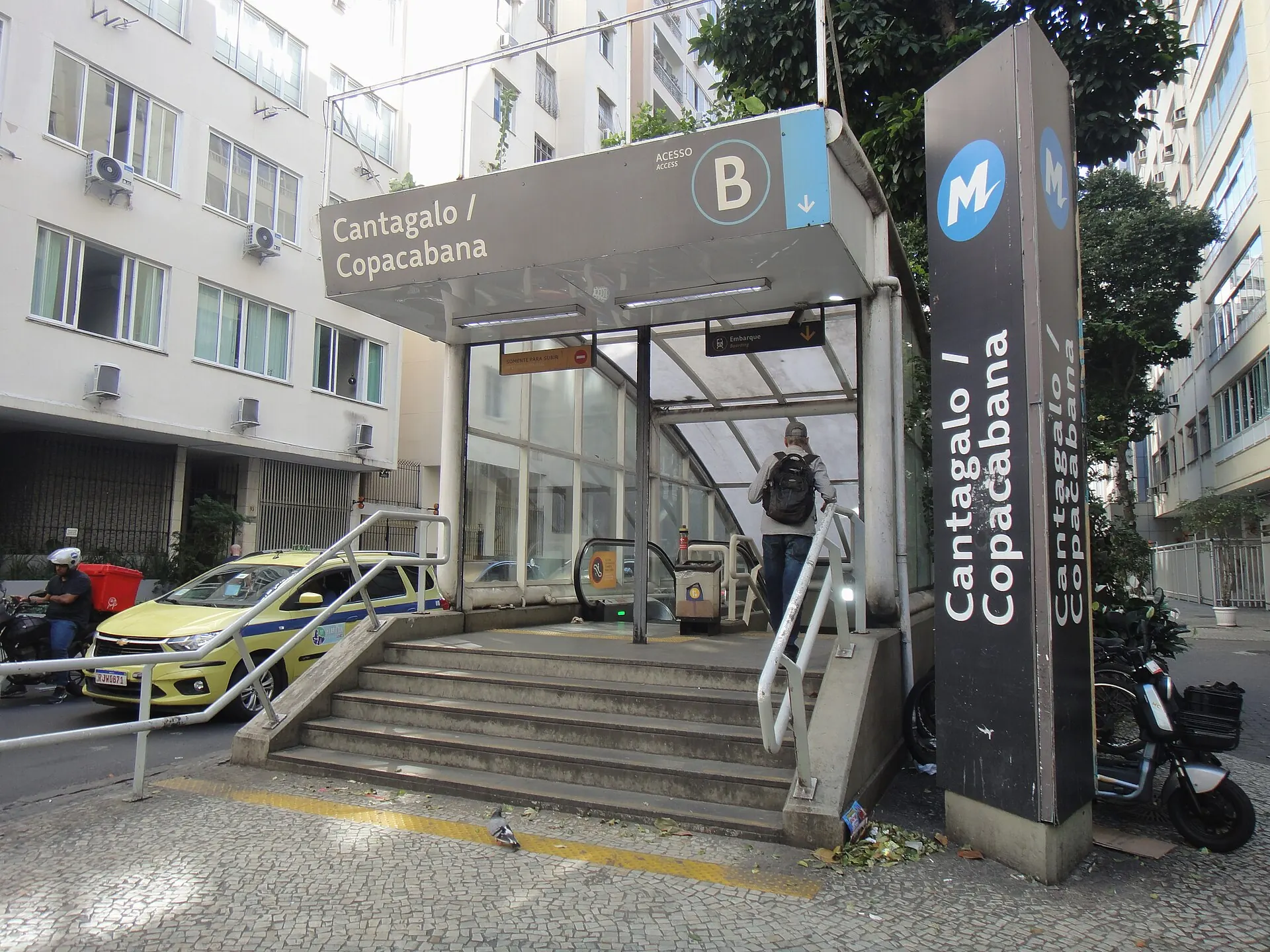
The simplest route is the metro plus the VLT, the light rail that runs through the old centre. Copacabana's three metro stations are all on Line 1; ride it to Carioca or Cinelândia, change to VLT Line 1 towards Terminal Gentileza and get off at Parada dos Museus, about 200 metres from the museum. Allow around 40 minutes door to door outside rush hour.
- Metro: R$ 7.90 a trip in 2026; contactless bank cards and phones work at the gates.
- VLT: about R$ 5 a ride in 2026. Buy a Jaé card at a stop machine or use the QR code in the Jaé app, then validate on board. Switching VLT lines within the hour costs nothing extra.
- On foot from the metro: from Uruguaiana station, cross Avenida Presidente Vargas and follow Rua Acre down to Praça Mauá.
- By car: allow 30 to 40 minutes by taxi or ride app, outside rush hour.
The VLT runs every day from 5 am to 11 pm, and Line 1 carries on past the Valongo to the Cidade do Samba, so you can use it to hop along the port. Tickets and cards are explained in more detail in getting around Rio.
The Museu do Amanhã
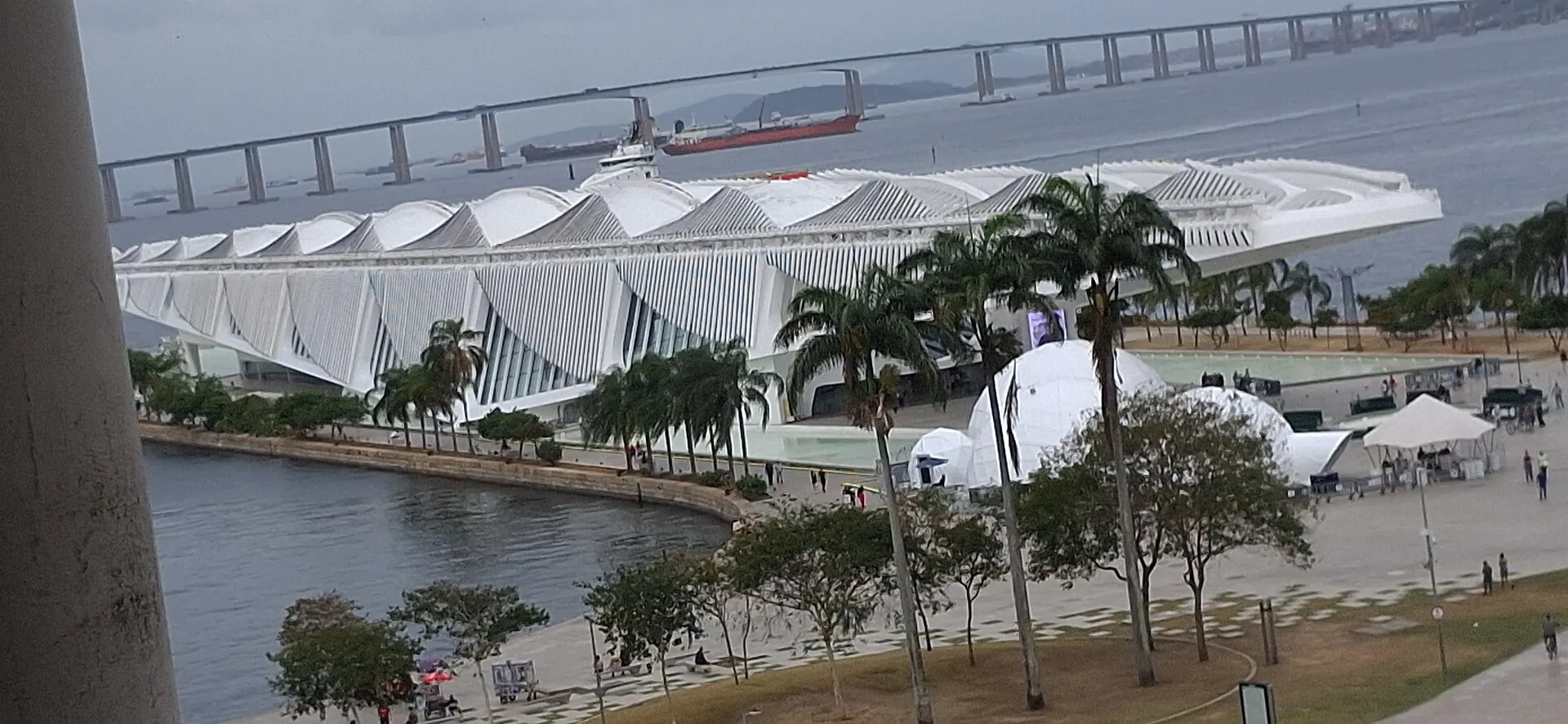
The Museum of Tomorrow opened in December 2015 on Píer Mauá, and more than 25,400 people came through the doors on its first weekend. The building is half the reason to go. Calatrava gave it a long white roof that juts out over the pier, with movable wings carrying solar panels that tilt to catch the sun, and he kept the whole thing low, no more than 18 metres above the pier. Water pumped from the bay cools the air conditioning, is filtered through the reflecting pool around the museum and flows back out at the end of the pier. That pool is what makes the building look as if it floats.
Inside, the main exhibition is a multimedia journey through the next 50 years, told in five parts: Cosmos, Terra (Earth), Onde Estamos? (Where Are We?), Amanhãs (Tomorrows) and Nós (Us). The upper floor has a ceiling more than 10 metres high, and temporary shows share roughly 5,000 square metres of exhibition space. The museum's two guiding ideas, sustainability and living together, run through all of it.
Gardens and paths run along the pier, and a walkway circles its edge, so walk the loop before you go in. The outdoor sculpture garden is free and needs no ticket.
Tickets and opening hours
- Days: Thursday to Tuesday. The museum closes on Wednesdays, so Monday is fine and Wednesday isn't.
- Hours: 10 am to 6 pm, with last entry at 5 pm.
- Tickets: R$ 40 full and R$ 20 half price in 2026; prices may have moved since.
- The 10th of every month: entry drops to R$ 10, with no half price on top.
- Free entry: people aged 60 and over, children up to 5, companions of disabled visitors, state-school teachers and pupils, and tour guides, all with proof.
Tickets are sold for a time slot: a 10 am ticket is valid from 10:00 to 10:59, so book ahead on the museum's own site and arrive within your hour. Half price also needs proof of eligibility at the door. Plan on two to three hours inside.
The Museu de Arte do Rio
Across Praça Mauá from the Museu do Amanhã stands the MAR, the Museu de Arte do Rio, the city's art museum, founded in 2013. Its school, the Escola do Olhar, works alongside the galleries and brings art and education together, with courses and activities for visitors and teachers. If art is on your list, check that the MAR is open on your day before you plan around it.
The Kobra mural on the waterfront
Walk west from the museums along the Boulevard Olímpico and you reach Etnias, the mural Eduardo Kobra painted in the port zone in 2016. It covers about 3,000 square metres with five faces, one people from each continent, chosen to echo the five Olympic rings: the Huli of Oceania, the Mursi of Africa, the Kayin of Asia, the Supi of Europe and the Tapajós of the Americas.
In August 2016 Guinness recognised it as the largest graffiti ever painted up to then. Kobra and his team worked twelve-hour days for two months and got through 3,000 spray cans, 700 litres of coloured paint and 1,800 litres of white for the background. It's outdoors and free, and the promenade in front of it is the best place to stand back for a photo.
The Cais do Valongo
A few streets north, in Praça Jornal do Comércio on Avenida Barão de Tefé, lie the stones of the Cais do Valongo. Building began in 1811, and until the transatlantic slave trade was banned in 1831 it was the main point in the Americas where enslaved Africans were landed and sold: estimates of the people brought ashore here run from 900,000 to about a million. In 1843 the wharf was buried under a new one, built for the arrival of Teresa Cristina, the bride of Dom Pedro II, and named the Cais da Imperatriz. Archaeologists found it again in 2011, during digs for the redevelopment of the port.
UNESCO added the site to the World Heritage List in July 2017 as the most important physical evidence of the arrival of enslaved Africans on the American continent. It's a site of conscience, and a ritual washing of the wharf has grown up around it. New panels and railings went in when the site reopened after restoration works in November 2023, and the VLT stop Parada dos Navios – Valongo is beside it. Read the panels first, and keep your visit quiet: this is a place of memory for Rio's Black community.
Pretos Novos and Pequena África
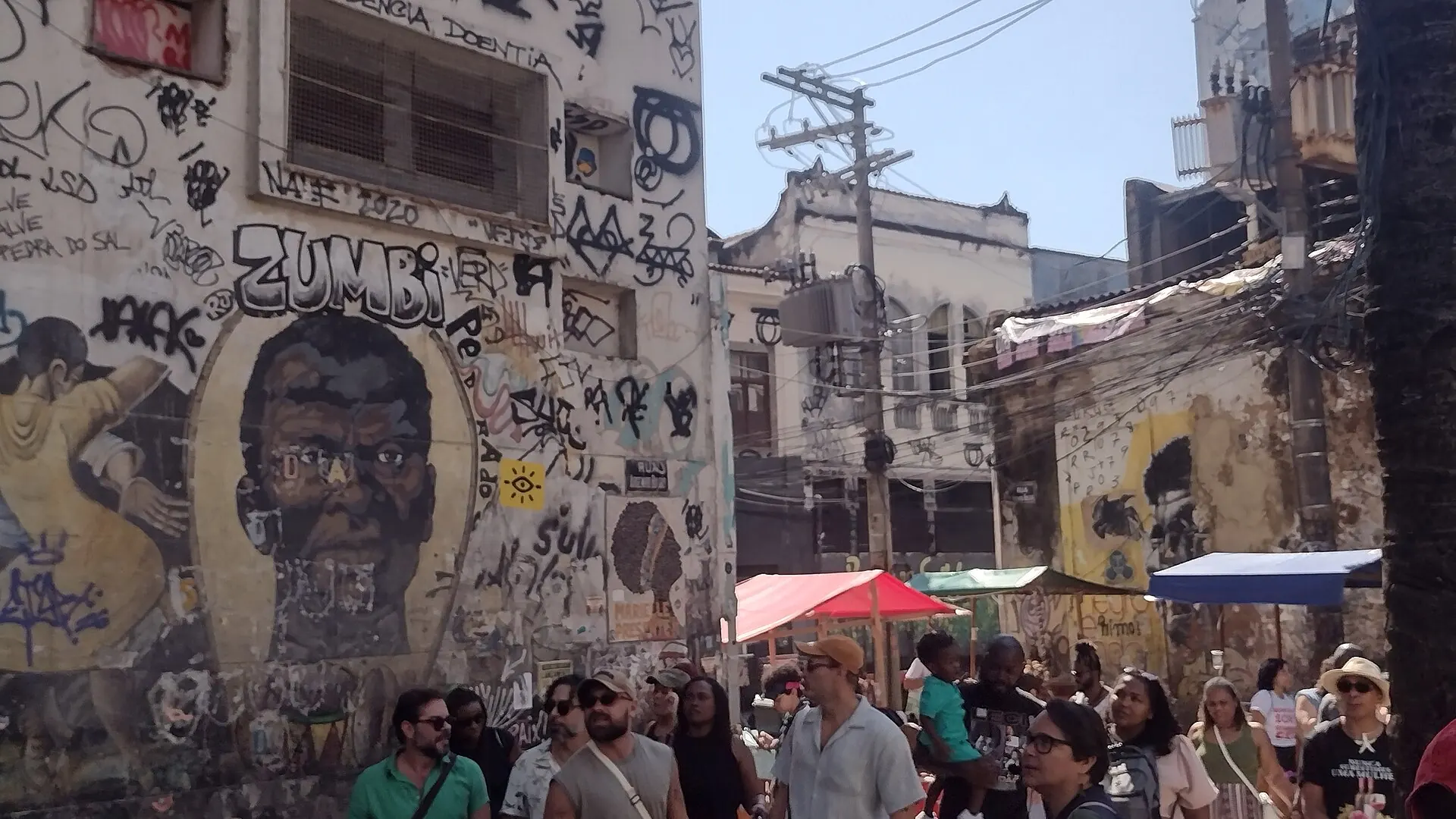
Pequena África, Little Africa, is the name the samba composer Heitor dos Prazeres (1898-1966) gave to Saúde, Gamboa and Santo Cristo, the port neighbourhoods with a largely Black population. Its community organisations publish their own map of the area, and local guides lead walks here; ask the concierge and Art de Vivre will book a local guide for you.
- Instituto Pretos Novos, Rua Pedro Ernesto 32, Gamboa: the burial ground of Africans who died soon after landing at the Valongo, before they could be sold. It was found in 1996 when the Guimarães family renovated their house. The institute, set up on 13 May 2005, looks after the archaeological site, a memorial exhibition with windows onto the dig and a gallery of Afro-Brazilian contemporary art. It opens Tuesday to Friday from 10 am to 4 pm and Saturday from 10 am to 1 pm. The nearest VLT stop is Harmonia.
- Largo de São Francisco da Prainha: a square below the Morro da Conceição; before the port was built, it was a small beach. Its church dates from 1696, and the statue in the middle is Mercedes Baptista, the first Black ballerina in the permanent corps de ballet of the Theatro Municipal.
- Pedra do Sal: the rock on Rua Argemiro Bulcão where salt was once unloaded, famous for its weekly samba circles; its story is in our samba guide.
For lunch, Angu do Gomes on the Largo da Prainha has been serving angu, a soft cornmeal porridge, since 1955, when it began as Manuel Gomes's food stalls.
A day at the port
- 10 am: the first slot at the Museu do Amanhã, then the pier garden.
- 1 pm: lunch on the Largo da Prainha.
- 2:30 pm: the Cais do Valongo, then the Instituto Pretos Novos, which closes at 4 pm on weekdays and 1 pm on Saturdays.
- 4 pm: back along the Boulevard Olímpico past the Kobra mural, and the VLT and metro home.
A Tuesday, Thursday or Friday keeps both the museum and the institute open all afternoon; avoid Wednesdays, when the Museu do Amanhã is shut. In the evening, a taxi or ride app is the easiest way back to Copacabana. To have the whole day arranged with a driver and a guide, write to us before you arrive.
Questions
Is the Museum of Tomorrow open on Mondays?
Yes. The Museu do Amanhã is open 10 am to 6 pm (last entry 5 pm), Thursday to Tuesday, and shut on Wednesdays. Tickets are sold for a time slot, and a slot is valid for the hour it starts in, so book ahead and arrive within your hour.
How much does the Museum of Tomorrow cost?
In 2026 a full ticket costs R$ 40 and half price is R$ 20. On the 10th of every month everyone pays R$ 10. Visitors over 60, and children under 6, get in free with proof of age. Prices change, so check the museum's site when you book.
How do I get to the Museum of Tomorrow from Copacabana?
Copacabana's three metro stations are all on Line 1; ride it to Carioca or Cinelândia, then VLT Line 1 to Parada dos Museus, about 200 metres from the entrance. Allow about 40 minutes. By road it's much the same, 30 to 40 minutes in light traffic.
How long should I spend at Rio's port?
Two to three hours covers the Museu do Amanhã. Add an hour for the waterfront and the Kobra mural, and two more for the Valongo wharf (Cais do Valongo) and the Instituto Pretos Novos, with lunch in between. A full day lets you see it all without rushing.
Is the Museum of Tomorrow good for children?
Yes. The exhibition is multimedia and hands-on, children up to 5 go free, and the gardens and walkway around the pier give them room to run. The free sculpture garden outside and the VLT ride along the port make the day easy with a family.
Can you visit the Cais do Valongo?
Yes. It's an open-air archaeological site in Praça Jornal do Comércio, on Avenida Barão de Tefé, a short walk north of the museums, beside the VLT stop Parada dos Navios – Valongo. Panels explain its history. Visit quietly: it's a World Heritage site of memory of the slave trade.
Sources
- Museu do Amanhã: programe sua visita (tickets, transport)
- Museu do Amanhã: visite (days, hours, free entry)
- Museu do Amanhã: home page (exhibition, sculpture garden)
- Museu do Amanhã: sobre o museu
- Santiago Calatrava: Museu do Amanhã, Rio de Janeiro
- arte!brasileiros: international museums committee publishes letter in defence of the MAR (14 January 2020)
- Correio da Manhã / Agência Brasil: Museu de Arte do Rio celebra 10 anos (30 March 2023)
- Eduardo Kobra: Etnias (2016)
- UNESCO World Heritage Centre: Valongo Wharf Archaeological Site
- Fórum de Organizações da Pequena África and MPF: Circuito Cultural e Gastronômico de Celebração da Herança Africana (guide)
- Jornal do Brasil: Cais do Valongo é reaberto depois de revitalização (23 November 2023)
- Instituto Pretos Novos: home page (opening hours)
- Instituto Pretos Novos: bem-vindos ao IPN
- VLT Carioca (Motiva): lines, fare and hours
- VLT Carioca (Motiva): guia de uso
- VLT Carioca (Motiva): mapas
- MetrôRio: lines and stations
- MetrôRio: meios e tarifas
- Diário do Rio: Bares históricos do Rio (16 July 2026)