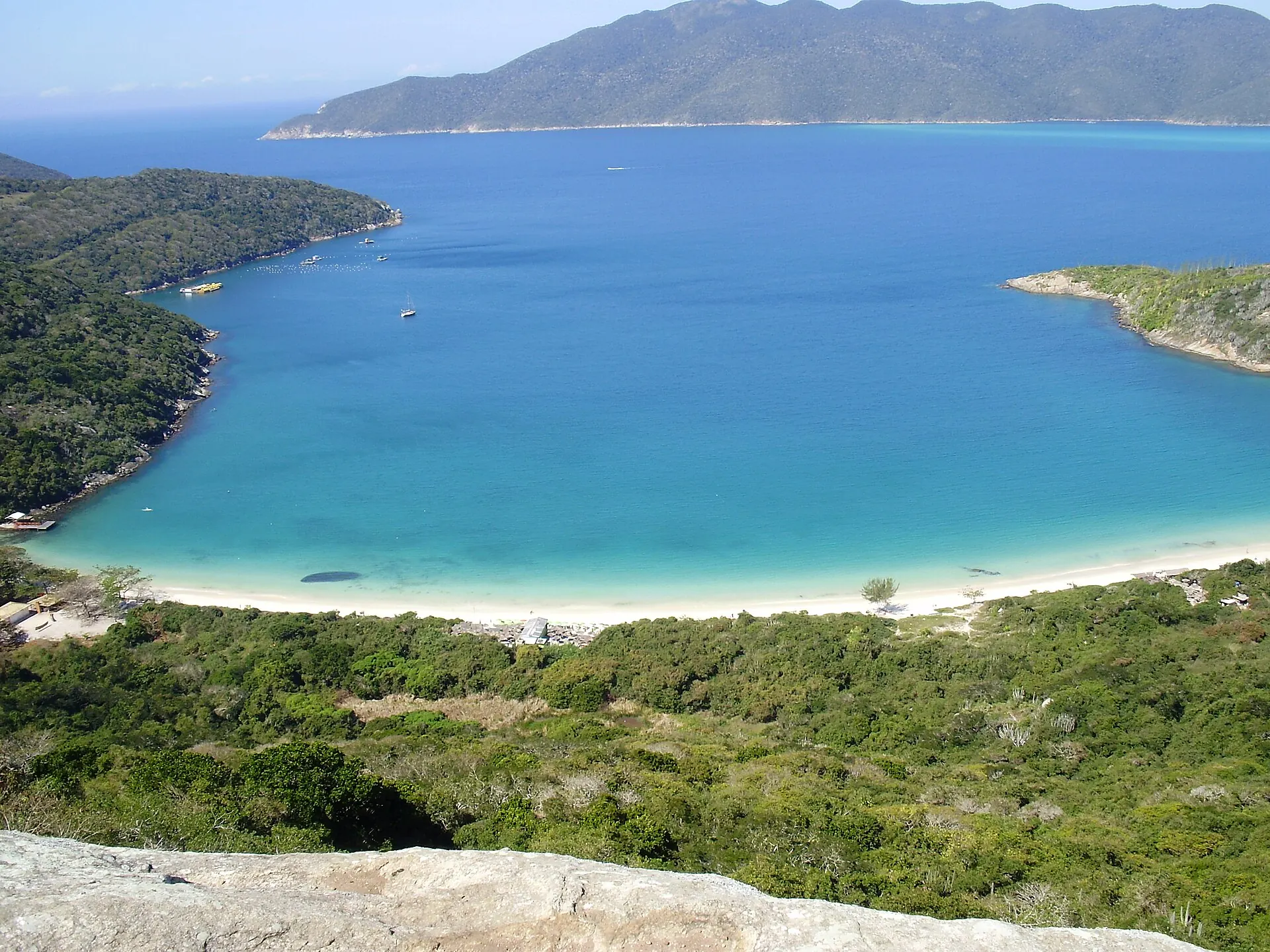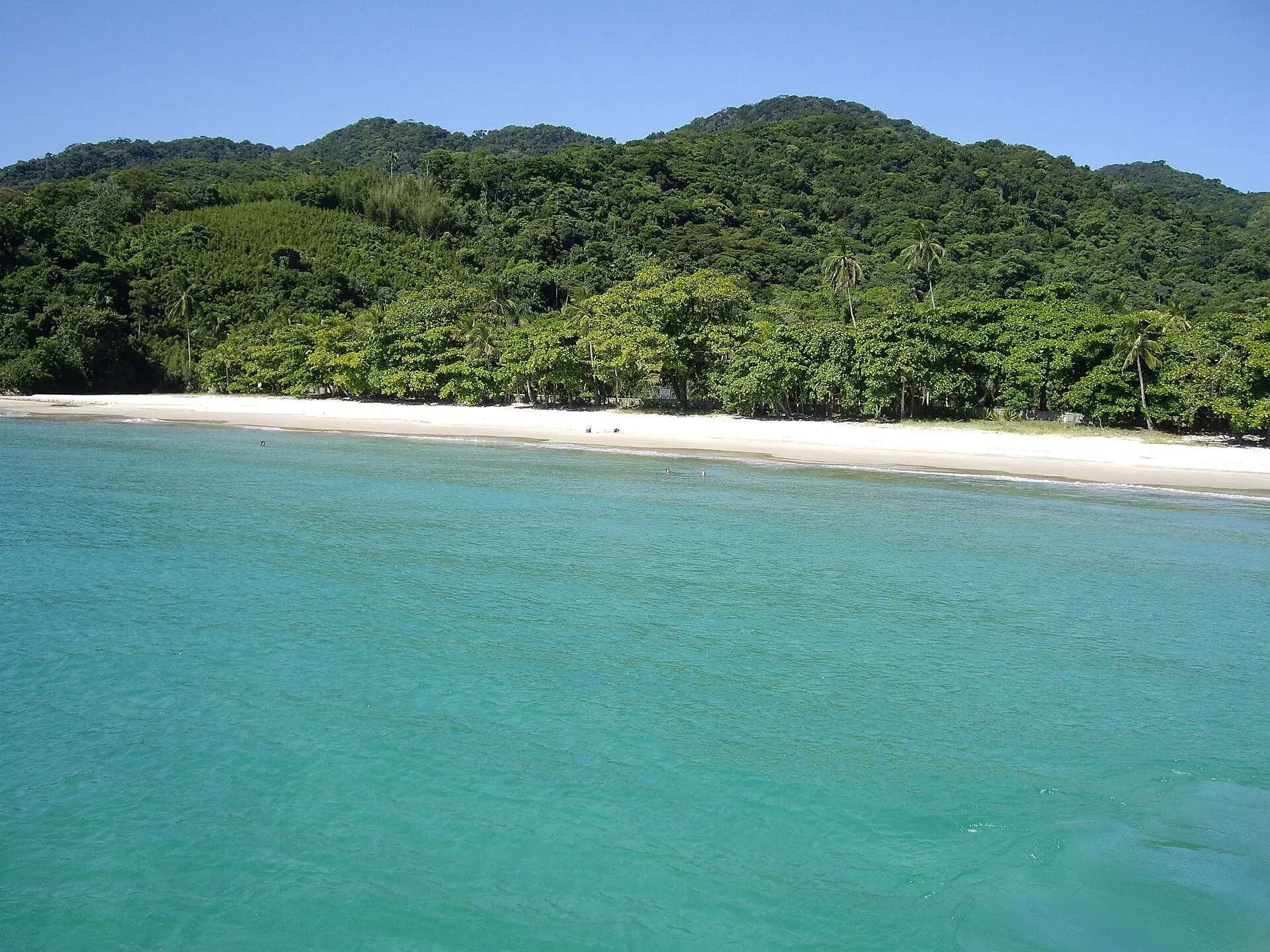
Ilha Grande is the largest island in the state of Rio de Janeiro, a forested island in the bay off Angra dos Reis. A state park and a biological reserve cover most of it, and UNESCO lists it with Paraty as a World Heritage Site for its culture and biodiversity. There's no bridge. From Copacabana you drive down the coast, take a boat to Vila do Abraão, the main village, and from there you get around on foot or by boat. You can do it in a long day, but the island is far better with a night or two.
- Where
- In the bay off Angra dos Reis, on the coast south-west of Rio
- From Copacabana
- About 2 hours by car to Conceição de Jacareí, then a 20 to 25 minute speedboat
- From Angra dos Reis
- Fast boats about 40 minutes; the ferry about 1.5 hours, once a day
- Getting around
- On foot and by boat; one 9 km road crosses to Dois Rios
- Best as
- One to three nights rather than a day trip
- Hiking season
- May to September
Getting there from Copacabana
Both main routes start with a drive west along the coast on the BR-101, the Rio–Santos road, and end with a boat to Abraão.
- Via Conceição de Jacareí, the quickest: the pier at Conceição de Jacareí, in the municipality of Mangaratiba, is roughly 130 km from Copacabana, about two hours by car with clear roads. Speedboats cross from the pier to Abraão in about 20 to 25 minutes. Costa Verde Transporte buses leave Rio's Novo Rio bus station for the pier, a trip of some two and a half hours.
- Via Angra dos Reis: from the boarding station in the centre of Angra, private fast boats reach Abraão in about 40 minutes, with frequent departures through the day. The traditional ferry is cheaper but slower, around 90 minutes, and sails once a day.
Boat timetables change with the season and the weather, so check departures the day before, note the time of the last boat back and leave some slack in the plan. If you'd rather skip the road, the concierge at Art de Vivre can arrange a helicopter to Angra, a driver to the pier, or a full day by boat among the islands of Angra.
Why it works better as an overnight
Two hours on the road each way plus the boat crossings comes to about five hours of travelling, which leaves only a few hours on the island. The beaches most people come for aren't in Abraão either: Lopes Mendes faces the open sea and Dois Rios is 9 km away by road, so both take a walk or a boat ride once you've landed.
With one night you get a full beach day. With two or three you can add the walk to Dois Rios and its museum, or a stretch of the round-island trail. If a single day is all you have, the concierge's boat day around Angra's islands and beaches puts you in the water for longer.
Vila do Abraão and getting around
Vila do Abraão is the island's main village, where the boats from the mainland land and where the round-island trail starts and finishes. From the pier, boats carry people on to the beaches of the bay side, such as Freguesia de Santana, Japariz and Iguaçu, and the communities around the island offer boat transport, meals and places to stay.
Otherwise you walk. Trails link the villages and beaches, and a 9 km road, the only land link between Abraão and Dois Rios, crosses the island to the old prison village. Pack light and bring shoes you can walk a trail in.
Lopes Mendes
Lopes Mendes is one of the island's best-known beaches, and it has been voted one of the ten best beaches in the world. It faces the open sea, and the round-island trail passes along it. You can reach it on foot along the trails from Abraão or by boat, and it's worth giving it a whole day rather than squeezing it between boats.
The sea here is rougher than in the sheltered bays around Abraão, so swim where you can stand and keep children close to the shore. Take water, a hat and something to eat.
Dois Rios and the old prison
Dois Rios was the site of the Instituto Penal Cândido Mendes, the Ilha Grande prison. It was deactivated and imploded in 1994, and an agreement signed on 18 October 1994 passed the area and its buildings to UERJ, the Rio de Janeiro state university. UERJ runs CEADS there, a research centre for the bay of Ilha Grande and the Costa Verde, which moved into its present building, once used by a Military Police battalion, on 18 September 1998. Beside it, the Ecomuseu Ilha Grande and its Museu do Cárcere keep the memory of the prison and its part in the island's history; the ruins of the prison are still there to see.
You reach Dois Rios along the 9 km road from Abraão. The road hasn't had major repairs in years, so expect a rough surface. Dois Rios beach is on the round-island trail too. Ask in Abraão for the museum's opening times before you set off.
The state park and the round-island trail
The Parque Estadual da Ilha Grande was created in 1971, and together with the Praia do Sul Biological Reserve it covers most of the island. UNESCO lists both as parts of the Paraty and Ilha Grande World Heritage Site, a mixed listing for culture and nature, and the listed area has the greatest concentration of endemic vascular plants in the Atlantic Forest. Across the whole site, which also takes in Paraty and the Serra da Bocaina, about 450 bird species have been recorded, along with 125 species of frogs and toads and around 150 mammals, among them the southern muriqui, the site's flagship species.
The Volta da Ilha Grande, the trail around the island, covers about 100 km and usually takes about seven days, though walkers adapt it to anything from five to 15, at 10 to 16 km a day. It starts and ends in Abraão, crosses four protected areas, and is waymarked with yellow and black signs bearing the design of Pico do Papagaio, the island's well-known peak. Along the way are the beaches of Lopes Mendes, Aventureiro, Dois Rios, Parnaioca and Caxadaço and the Gruta do Acaiá. You don't need a tent or much food, because communities along the route offer beds, meals and boat transport. May to September, with milder temperatures and less rain, is the best time to walk it.
For the steeper trails and Pico do Papagaio, a local guide is worth having; the concierge can book one.
Planning your stay
Two nights is a good first visit:
- Day one: leave Copacabana early, drive to Conceição de Jacareí and take a speedboat to Abraão; settle in, then take a boat to one of the bay beaches for the afternoon.
- Day two: give the whole day to Lopes Mendes, on foot or by boat.
- Day three: a morning swim, then the boat back to the mainland and the drive home, timed to miss the evening traffic into Rio.
A third night lets you add the walk to Dois Rios and the Ecomuseu, or a couple of days on the round-island trail.
For more of this coast, our guide to Paraty covers the historic town further down the coast, and the concierge's boat days to Angra pass among the same islands. Shorter days out from Copacabana include Petrópolis in the mountains and Arraial do Cabo to the east. Send us your dates and we'll line up the driver, the boat or the helicopter to Angra.
Questions
Can you visit Ilha Grande as a day trip from Rio?
You can, but it's a long day: about two hours by car each way to Conceição de Jacareí plus 20 to 25 minutes by speedboat, or a longer drive to Angra and a 40-minute fast boat. That's around five hours of travelling for a few hours on the island. One night is far better, and two or three let you reach Lopes Mendes and Dois Rios without rushing.
How do I get from Rio to Ilha Grande?
Drive or take a Costa Verde Transporte bus from the Novo Rio bus station in Rio (roughly two and a half hours) to Conceição de Jacareí, then a speedboat to Vila do Abraão in about 20 to 25 minutes. From central Angra dos Reis, fast boats take about 40 minutes and the traditional ferry around 90 minutes, sailing once a day. Check boat times the day before.
What is the best-known beach on Ilha Grande?
Lopes Mendes, which has been voted one of the ten best beaches in the world. It faces the open sea; you reach it along the trails from Abraão or by boat, and it deserves a whole day.
How long is the trail around Ilha Grande?
The Volta da Ilha Grande is about 100 km and usually takes about seven days, adaptable from five to 15, walking 10 to 16 km a day from Vila do Abraão and back. Communities along the route offer beds, meals and boat transport, so you don't need a tent. May to September, with milder temperatures and less rain, is the best season.
What happened to the prison on Ilha Grande?
The Instituto Penal Cândido Mendes at Dois Rios was deactivated and imploded in 1994. Later that year the area passed to UERJ, the state university, which runs a research centre there alongside the Ecomuseu Ilha Grande and its Museu do Cárcere, which keeps the memory of the prison. Dois Rios is 9 km from Abraão by road.
Is there a helicopter from Rio to Ilha Grande?
Art de Vivre's concierge arranges helicopter flights to Angra dos Reis for guests, which takes the road out of the trip. From central Angra, private fast boats reach Vila do Abraão in about 40 minutes, with frequent departures during the day.
Sources
- Ministério do Turismo: Volta da Ilha Grande, trilha une praias paradisíacas à história de Angra dos Reis (14 October 2026)
- UNESCO World Heritage Centre: Paraty and Ilha Grande, Culture and Biodiversity
- UERJ, CEADS: news on Vila Dois Rios, the 1994 handover, the park and the Abraão to Dois Rios road
- UERJ em Questão, no. 103 (March to May 2014): CEADS, the Ecomuseu and the 1994 implosion of the prison
- Governo do Estado do Rio de Janeiro, Portal Turismo RJ: Angra dos Reis and Ilha Grande
- Governo do Estado do Rio de Janeiro, Portal Turismo RJ: Mangaratiba
- Rome2rio: Copacabana to Conceição de Jacareí (approximate drive and bus times)
- Rome2rio: Copacabana to Ilha Grande (boat operators and crossing times)