The Maracanã is where Rio goes to watch football. It was built for the 1950 World Cup, rebuilt for 2014, and has staged two World Cup finals and both ceremonies of the 2016 Olympics. From Copacabana it's a metro ride north with one change of train. Take the daily tour to walk through the dressing rooms and out to the pitch, or come back for a match. Flamengo and Fluminense, two of the city's big clubs, run the stadium today, and the tour, the tickets and the metro route are all simple once you know how they work.
- Where
- Avenida Rei Pelé (once Radial Oeste), Maracanã, in Rio's North Zone
- From Copacabana
- Metro Line 1, change to Line 2 between Botafogo and Central, get off at Rei Pelé–Maracanã
- Stadium tour
- Daily 9am to 5pm, last entry 4.30pm; hours change on match days
- Capacity
- 78,838 seats
- Clubs
- Run by Flamengo and Fluminense, on a 20-year concession signed in 2024
- Metro fare
- R$ 7.90 in 2026, contactless cards accepted
The stadium today
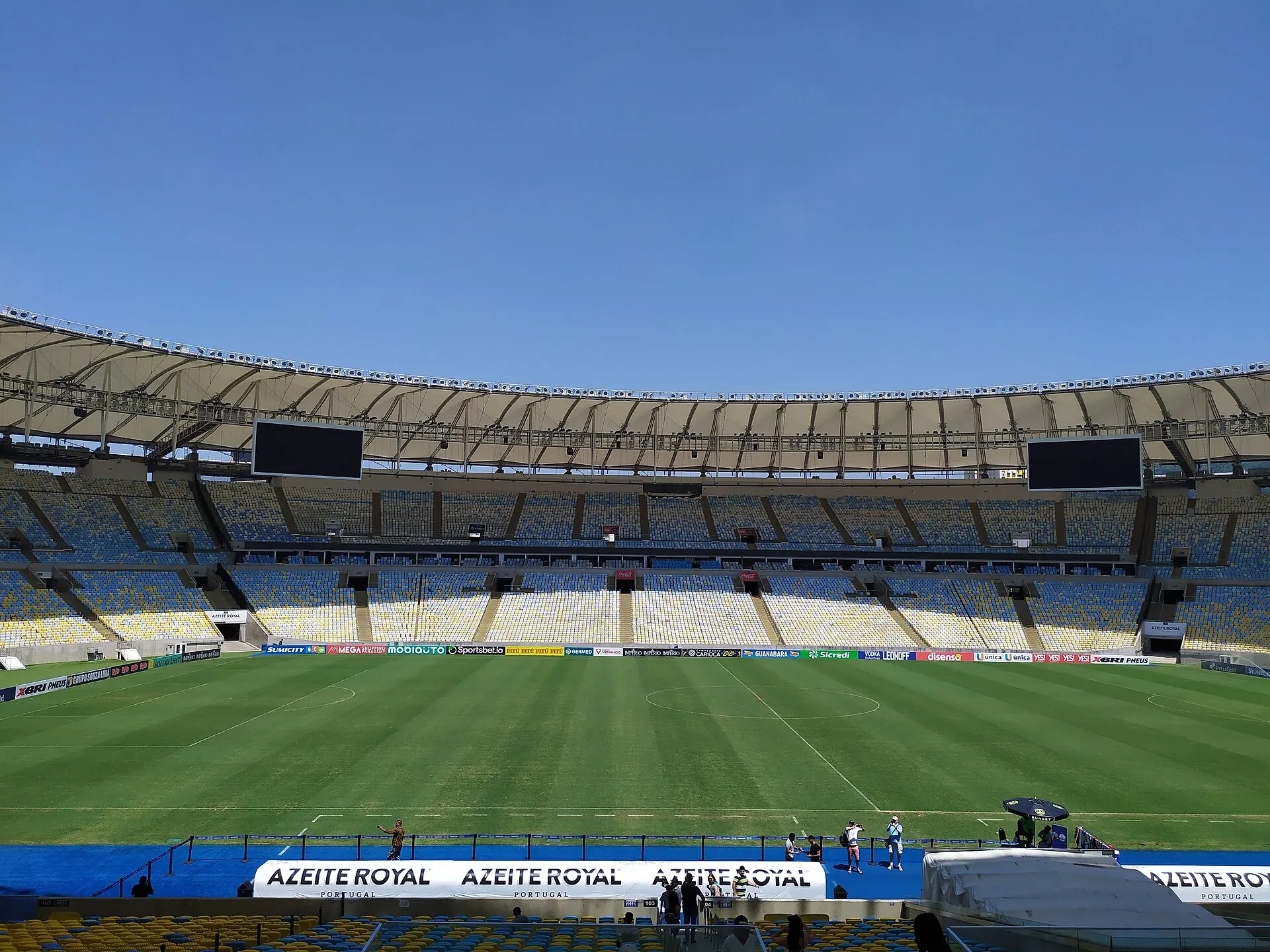
The official name is Estádio Jornalista Mário Filho, after the journalist who edited the sports pages of O Globo and wrote column after column in the late 1940s demanding a new stadium, one that had to be the biggest in the world. In its first months the papers called it the Colosso do Derby; the name Maracanã first appeared in O Globo late in 1950 and stuck.
After the rebuild for the 2014 World Cup it seats 78,838, which still makes it the largest stadium in Brazil. Next door, the Maracanãzinho is the indoor arena of the same complex: it opened in 1954, was refurbished for the Pan American Games of 2007 and holds up to 11,800 people.
The stadium is owned by Rio de Janeiro state. Flamengo and Fluminense have shared its management since 2019, and in September 2024 they signed a 20-year concession for the whole complex with the state government, with Flamengo holding 65% and Fluminense 35%. Their fixture lists are the first place to look when you want to see a game.
1950 and the Maracanazo
Brazil was named host of the World Cup in 1946, and the cornerstone of the new stadium went down on 20 January 1948. It was inaugurated on 16 June 1950 with scaffolding still standing in the stands. The first match came the next day, with free entry: a São Paulo state team beat a Rio state team 3-1. A week later Brazil started their World Cup here by beating Mexico 4-0.
The deciding match of the tournament, on 16 July 1950, is the most famous game in Brazilian football. Brazil only needed a draw against Uruguay, and the first half ended goalless. Friaça put Brazil ahead two minutes into the second half, Schiaffino equalised in the 21st minute of the half and Ghiggia scored the winner in the 34th. Uruguay won 2-1 in front of 199,854 spectators, the largest crowd ever recorded at the stadium. The game has been known ever since as the Maracanazo.
Pelé, popes and concerts
The Maracanã's record book goes well beyond 1950. A few of the moments locals still bring up:
- 1969: Pelé scored the 1,000th goal of his career here, a penalty against Vasco. The same year a World Cup qualifier between Brazil and Paraguay drew 183,341 paying spectators.
- 1980: Pope John Paul II celebrated an open-air mass in the stadium; he came back for a second celebration in 1997. The same year Frank Sinatra sang here, and Flamengo won the Brazilian championship decider 3-2 against Atlético Mineiro.
- 1990 to 1993: Paul McCartney played in April 1990, Rock in Rio held its second edition here in 1991, and Madonna came in 1993.
Pelé's name is now on the stadium's doorstep too: the avenue along the stadium is Avenida Rei Pelé, and the metro station is called Rei Pelé–Maracanã.
The 2014 final and the 2016 Olympics
The stadium was rebuilt for the 2014 World Cup. Work began in August 2010, the bill passed R$ 1 billion, and the new Maracanã reopened in June 2013 with a 2-2 friendly between Brazil and England, in which Fred scored the first goal of the new era.
On 13 July 2014 it staged its second World Cup final. Germany beat Argentina with a goal from Mario Götze eight minutes before the end of extra time, Germany's fourth world title and its first in 24 years.
Two years later the Olympics came. The opening ceremony of the Rio 2016 Games took place here on 5 August 2016, directed by Fernando Meirelles, Andrucha Waddington, Daniela Thomas and Rosa Magalhães, with choreography by Deborah Colker. The closing ceremony was held at the Maracanã as well.
The stadium tour
The tour runs every day from 9am to 5pm, with last entry at 4.30pm. You go into the dressing rooms and the press conference room, out to the side of the pitch, and through an exhibition of the stadium's history, with guides along the route to answer questions. Hours can change on match and event days, so check the official Maracanã Tour ticket site before you set off.
- Tickets: sold online on the official ticket site; check the current price there before you go.
- Half price: students, children aged 3 to 11, over-60s and people with disabilities, with a companion when needed.
- Free: children up to 2 years old. Free entry does not apply to tour groups.
- Where: Avenida Rei Pelé, the road once called Radial Oeste. On foot, come from the metro station; by car, Gate 2 leads to the visitor car park.
Go on a morning with no match scheduled, when the tour keeps its full hours and the stands are empty for photos.
Seeing a match
A match tells you more about Rio than the tour can. Start with the fixtures of Flamengo and Fluminense, who run the stadium. Brazil's national team plays here too: its farewell friendly before the 2026 World Cup, against Panama on 31 May 2026, was at the Maracanã.
Tickets go on sale online through official channels. For the Panama friendly, buyers registered a photo and an ID online with the provider Bepass before buying; foreigners could register with a passport, each person could buy up to four tickets, and prices ran from R$ 100 to R$ 400. Buy only through the official channel, and keep the passport you registered with to hand on the day.
For a first match, a guide makes it easy: tickets, the ride there and back, and someone beside you who knows which end is which. Art de Vivre's concierge books guides and a five-hour visit to Flamengo's training ground and the Maracanã for football fans.
The metro fills up before kick-off and after the final whistle. Carry your phone in a front pocket, and agree where to meet in case you're split up; our note on staying safe in Copacabana has more tips.
Getting there from Copacabana
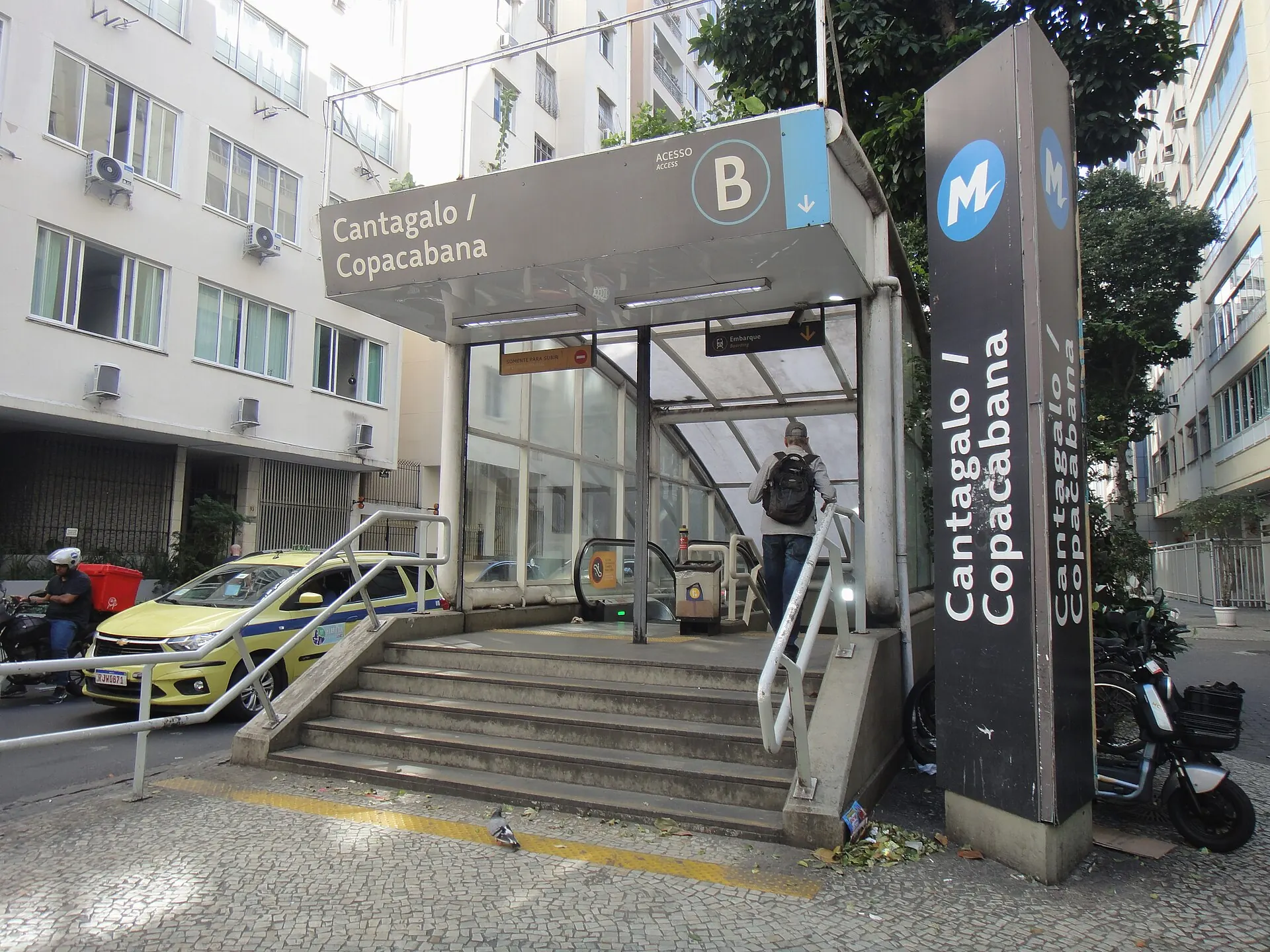
Take the metro; it is the easy way. Board Line 1 at Cantagalo, Siqueira Campos or Cardeal Arcoverde, the three Copacabana stations, on a train heading for Uruguai. Line 2 runs from Pavuna to Botafogo and shares every station from Botafogo to Central do Brasil with Line 1, so change at any of them onto a train for Pavuna, and ride to Rei Pelé–Maracanã. Exit A leads to the stadium; Exit B is for the suburban trains, which stop here too.
- Fare: one ride was R$ 7.90 in 2026, paid by tapping a bank card or phone at the gate.
- Exit A hours: Monday to Saturday from 5am to midnight, Sundays and holidays from 7am to 11pm.
- By car: tour visitors park through Gate 2 on Avenida Rei Pelé.
Fares, payment and the rest of the network are covered in the getting-around guide. If you'd rather not take the metro on a match day, a driver can be booked through the concierge.
Planning your visit
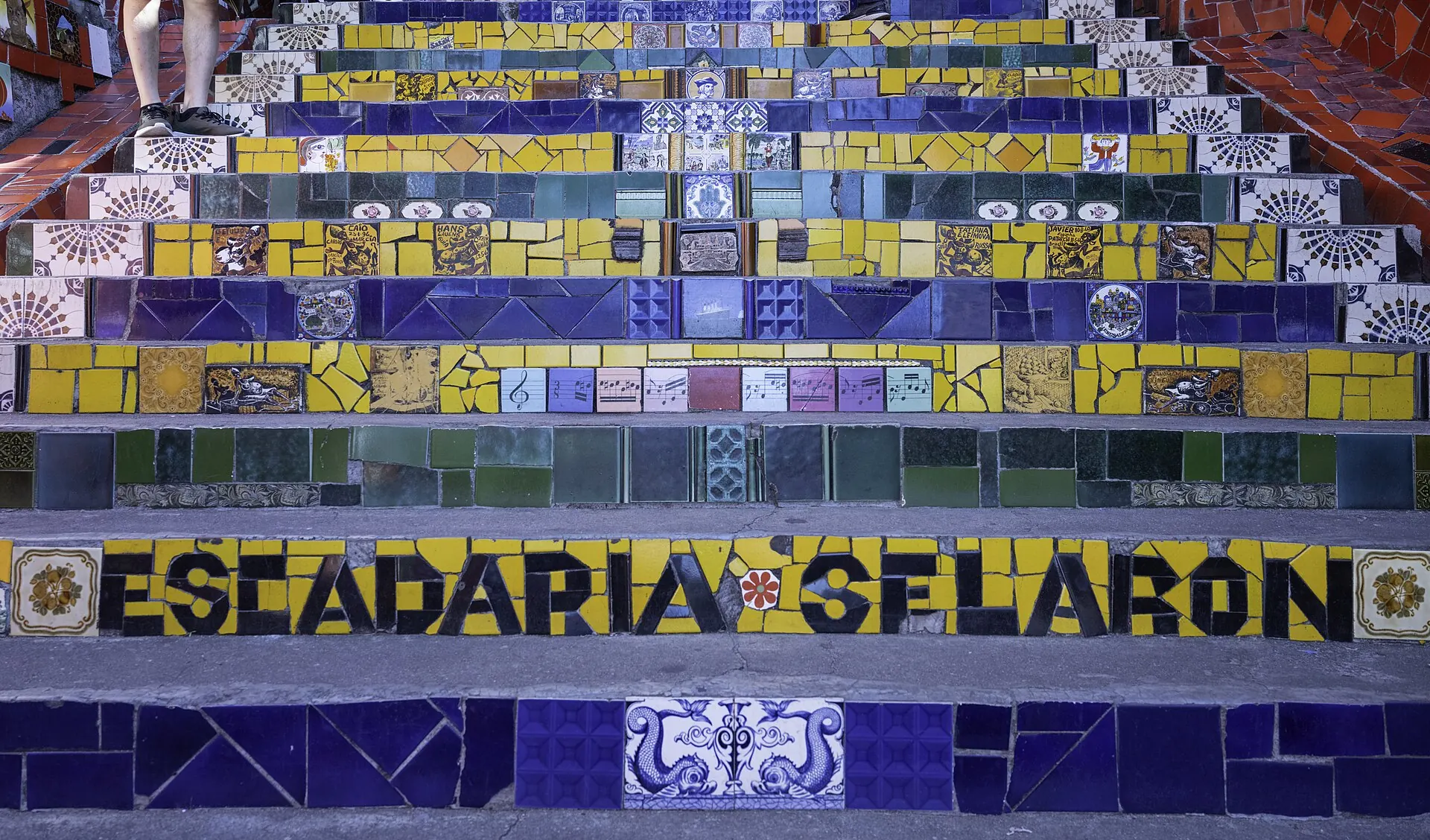
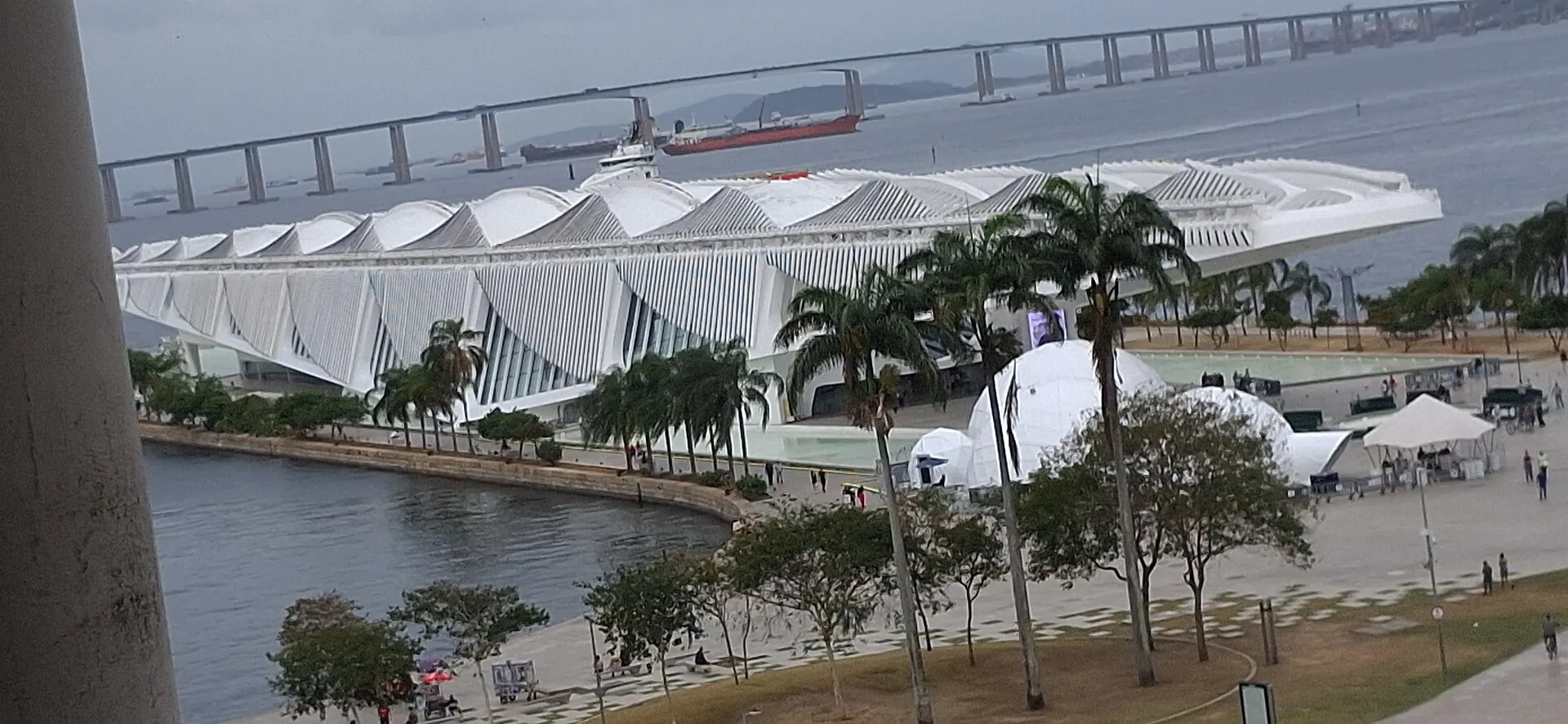
The stadium is in Rio's North Zone, so make it the anchor of a half day rather than a quick stop. On the way back the metro runs through Centro, which makes the Maracanã a good pair with an afternoon downtown: see our guides to Selarón's staircase and Lapa and to the port and the Museu do Amanhã.
For a full football weekend, the concierge can line up the tour, a match with a guide and the transport, and our Copacabana weekend itinerary fills the rest of the days. Penthouse guests can ask before they arrive; if a big match falls on your dates, tell us early, because tickets for the big games go fast.
Questions
Is the Maracanã stadium tour open every day?
Yes. The tour runs daily from 9am to 5pm, with last entry at 4.30pm. On match and event days the hours can change, so check the official Maracanã Tour ticket site before you go, and plan your visit for a day with no game.
Which metro line goes to the Maracanã from Copacabana?
Take Line 1 from Cantagalo, Siqueira Campos or Cardeal Arcoverde towards Uruguai. Change to a Line 2 train for Pavuna at any station between Botafogo and Central do Brasil, where both lines stop, and ride it to Rei Pelé–Maracanã station. Exit A leads to the stadium. The 2026 fare was R$ 7.90, paid with a contactless card at the gate.
How can a visitor buy tickets for a match at the Maracanã?
Buy through the home club's or the organiser's official channel. For Brazil's friendly against Panama on 31 May 2026, buyers registered their face and an ID online first, foreigners could use a passport, and each person could buy up to four tickets. The simplest way for a first match is to go with a guide; Art de Vivre's concierge books them.
What is the Maracanã's official name and capacity?
The official name is Estádio Jornalista Mário Filho, after the O Globo sports editor who campaigned for the stadium in the 1940s. Since the rebuild for the 2014 World Cup it seats 78,838, which makes it the largest stadium in Brazil.
Is the Maracanã tour good for children?
Yes, the walk into the dressing rooms and out to the pitch goes down well with children. Children aged 3 to 11 pay half, and under-3s go free. If you're bringing a pushchair, the metro station has a lift on its mezzanine levels.
Which matches were played at the Maracanã's two World Cup finals?
The deciding match of the 1950 World Cup, on 16 July 1950, when Uruguay beat Brazil 2-1 in front of 199,854 spectators, and the 2014 final on 13 July 2014, when Germany beat Argentina with Mario Götze's goal in extra time.
Sources
- Maracanã Tour: official ticket site (hours, concessions, access)
- MetrôRio: Rei Pelé–Maracanã station (exits, hours, stadium and Maracanãzinho facts)
- MetrôRio: lines and stations
- MetrôRio: fares and payment
- Agência Brasil: De estádio a arena, as muitas batalhas vencidas pelo Maracanã (June 2020)
- Agência Brasil: Maracanazo, 70 anos do sonho interrompido (16 July 2020)
- Agência Brasil: Após 24 anos, Alemanha conquista o tetracampeonato (13 July 2014)
- Agência Brasil: Festa no Maracanã marca abertura dos Jogos Olímpicos Rio 2016 (5 August 2016)
- Agência Brasil: Rio 2016 ceremony venues and tickets (30 April 2015)
- Agência Brasil: ticket sales and facial registration for Brazil v Panama at the Maracanã (13 May 2026)
- InfoMoney / Agência O Globo: Maracanã faz 75 anos (16 June 2025)
- Diário do Grande ABC: Flamengo e Fluminense assinam contrato de concessão do Maracanã por 20 anos (27 September 2024)