Rio eats well and without fuss. The food visitors remember is rarely formal: a bowl of açaí after the beach, a packet of Biscoito Globo with an iced mate on the sand, a long feijoada lunch, a warm pão de queijo from the corner bakery. This guide explains each dish and drink by what it's closest to back home, when Cariocas eat it and where to try a good one. For the restaurants we book for guests, see the concierge and our Copacabana guide.
- Friday and weekend lunch
- Feijoada with rice, couve, farofa and orange
- On the beach
- Iced mate, Biscoito Globo and grilled queijo coalho
- After the beach
- Açaí, or a fresh juice at a juice bar
- At the counter
- Pão de queijo, coxinha and pastel
- Barbecue
- Picanha at a rodízio churrascaria
- To drink
- Caipirinha, cachaça and guaraná
Feijoada
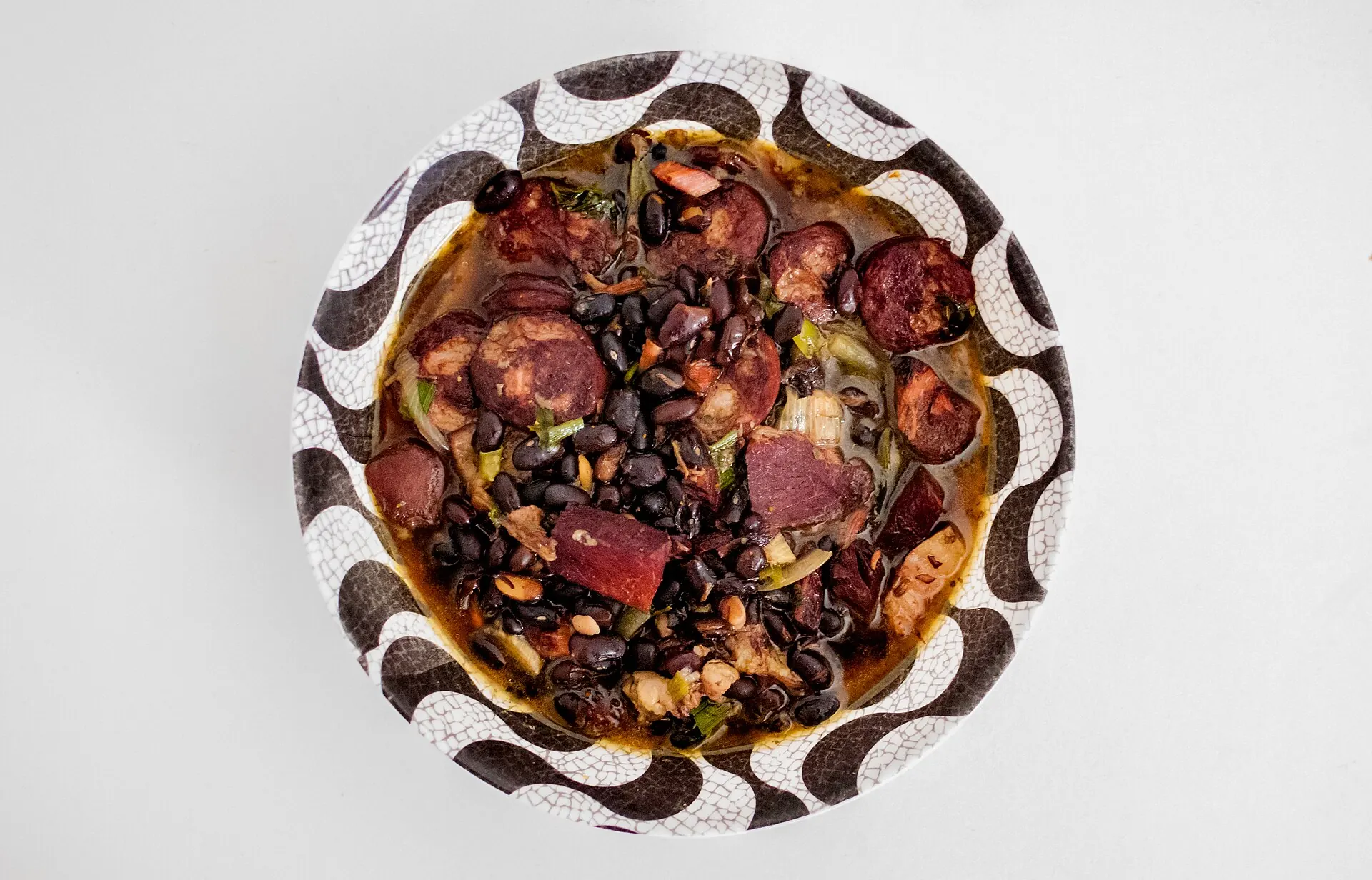
Feijoada is a stew of beans slow-cooked with salted and smoked pork: sausage, ribs, dried beef and, in the fuller versions, the cheaper cuts as well. In Rio the beans are black, so think of a dark, smoky cassoulet. It's served with white rice, couve (finely shredded greens fried with garlic), farofa (toasted manioc flour to sprinkle over, a little like seasoned breadcrumbs), slices of orange to cut the richness and, often, crackling. Cariocas even have a day for it: Friday is feijoada day, and it's just as popular at weekends, eaten as a long, sociable lunch with a slow afternoon to follow.
Academia da Cachaça, a Leblon bar founded in 1985, with a second branch in Barra da Tijuca, serves feijoada every day, at any hour it's open, alongside a long list of cachaças and its caipirinhas. The Leblon branch has live choro, Brazil's lively instrumental music, on Thursdays from 7pm to 10pm. For a smaller taste first, order a caldinho de feijão, a cup of thick bean broth that is a boteco classic.
Mate, Biscoito Globo and queijo coalho on the beach
On the sand, food comes to you. Vendors walk the beach with metal canisters of mate, iced tea brewed from toasted mate leaves and often mixed with lemonade: gentle, a little smoky and very cold. Its partner is Biscoito Globo, a puffed ring made from polvilho, manioc starch, so light and crisp it almost dissolves on the tongue: think of an airy, lightly salted cousin of the crisp, or the sweet version if you prefer. Cariocas call the pair the city's snack, and it has been declared part of Rio's cultural heritage.
The biscuit's story began in 1953, when the Ponce brothers, Milton, Jaime and João, learned to make polvilho biscuits at a cousin's bakery in the Ipiranga district of São Paulo. In 1954 they started selling them in Rio, and the biscuit took its name from the Botafogo bakery that had hired them.
The other beach staple is queijo coalho, a firm white cheese grilled on a stick over a small charcoal burner the vendor carries, until it browns outside and squeaks between your teeth, much like halloumi. Carry small notes for the vendors and ask the price as you order.
Açaí and the juice bars
Açaí, in Rio, is the purple fruit of an Amazon palm, frozen and blended into a thick, icy purée and eaten with a spoon, like a dense sorbet, usually topped with granola and sliced banana. Cariocas treat it as a snack after the beach or the gym rather than a dessert, and order it in a cup or a bowl by size.
Juice bars open to the street are a Rio habit, with fruit pressed or blended to order at the counter. Try maracujá (passion fruit), caju (the fruit of the cashew tree), acerola, or abacaxi com hortelã, pineapple with mint, and ask for it sem açúcar if you don't want sugar added. Bibi Sucos, which opened in Leblon in 1993, now has more than 20 shops around Rio serving juices made to order, açaí and light meals.
Pão de queijo, coxinha and pastel
Rio's bakeries and snack bars run on salgados, savoury snacks eaten standing at the counter with a coffee or a juice.
- Pão de queijo: small cheese breads made with manioc starch, crisp outside and chewy inside, a little like a gougère with more bounce. A Minas Gerais classic, eaten at breakfast or with an afternoon coffee.
- Coxinha: shredded chicken in a soft dough, shaped like a teardrop or a little drumstick, then breaded and fried; in British terms, a croquette. The best ones come out of the fryer while you wait.
- Pastel: a thin rectangle of pastry filled with cheese, minced beef, heart of palm or prawns and fried until it blisters, closer to a giant crisp samosa than to a pie. At the weekly street markets, pastel stalls sell them with caldo de cana, sugarcane juice pressed in front of you.
Tapioca and food from the Northeast
Tapioca in Brazil isn't the pudding. It's a pancake made by scattering moist manioc starch on a hot, dry pan until it sets into a pale, chewy disc, then folding it around a filling: cheese, coconut, ham or condensed milk. It comes from the Northeast, it's naturally gluten-free, and kiosks make it to order.
For a whole evening of northeastern food and music, go to the Feira de São Cristóvão, officially the Centro Municipal Luiz Gonzaga de Tradições Nordestinas, in the São Cristóvão neighbourhood north of the centre. Nearly 700 stalls sell food, drink and crafts from the region, the music runs from forró to xote and baião, and its restaurants serve dishes from the north and northeast of Brazil. It usually opens from 10am to 6pm Tuesday to Thursday, from 10am to 4am on Fridays and Saturdays, and from 10am to 8pm on Sundays. Entry was R$ 10 from Friday to Sunday when we checked in October 2026, except on some show nights, paid in cash at the door or online. For the late nights, book a driver through the concierge or take a ride app.
Picanha at a churrascaria
Picanha is the star of a Brazilian barbecue: the rump cap, sold in the United States as top sirloin cap, cooked with its thick layer of fat left on. At a churrascaria it's bent onto a skewer in a C-shape, rubbed with coarse salt, grilled over charcoal and carved at your table. Most churrascarias work as a rodízio: one price per person, a buffet of salads and sides, and waiters circling with skewers of picanha, sausage, chicken hearts, lamb and more until you turn your table card from green to red.
Churrascaria Palace, on Rua Rodolfo Dantas in Copacabana, opened in 1951, and the city now recognises it as part of Rio's cultural heritage. Its rodízio includes all the meats and the buffet, with drinks and desserts charged separately. Pace yourself, because the skewers keep coming. For the steakhouse on Guanabara Bay that we book for guests, see the concierge.
Moqueca
Moqueca is a fish or seafood stew from Brazil's coast, cooked slowly in a heavy pot with tomatoes, onions, peppers and coriander. The Bahian version adds coconut milk and dendê, a deep orange palm oil, which give it the richness and colour of a mild Thai coconut curry without the chilli heat; the version from Espírito Santo leaves both out and tastes lighter. It comes to the table bubbling in its pot, with white rice, farofa and pirão, a soft porridge made from the cooking broth thickened with manioc flour. Moquecas are made for sharing, which makes them the dish for a long lunch with friends.
Caipirinha, cachaça and guaraná
Cachaça is Brazil's sugarcane spirit. The name belongs only to spirit made in Brazil from fermented sugarcane juice and bottled at 38% to 48% alcohol. Think of a grassier, earthier relative of rum, made from the fresh juice rather than from molasses. Aged cachaças are sipped neat, like a good rum or whisky.
A caipirinha is fresh lime muddled with sugar, then cachaça and crushed ice: a rustic relative of the daiquiri, served on the rocks. Strength varies a lot from bar to bar, so take the first one slowly; if you'd rather skip the cachaça, ask for a caipiroska, made with vodka.
Guaraná is the soft drink you'll see everywhere, a sweet, fruity soda flavoured with guaraná, an Amazon fruit. It tastes a little like cream soda with a hint of apple, and it goes well with a beach sandwich or a plate of salgados.
When Cariocas eat what
Breakfast is light: milky coffee, bread toasted on the griddle with butter, fruit, a pão de queijo. Lunch is the main meal of the day, and on weekdays many restaurants serve a set lunch. Dinner starts late by northern European standards, and at weekends restaurants keep filling up well into the evening. In between, Cariocas snack: a juice and a salgado at the counter, an açaí after the beach, biscuits and mate on the sand. Feijoada belongs to Friday and weekend lunches, a churrascaria suits a long lunch or an early dinner, and moqueca a lazy lunch by the sea.
Rio also has a steak dish of its own, filé à Oswaldo Aranha, a steak smothered in fried garlic, created at a restaurant in Lapa. For an evening of chope and petiscos, the bar snacks, see our guide to Copacabana's classic bars; for a samba night after dinner, our samba guide. If you'd like a table booked anywhere on this page, write to us.
Questions
What is the most typical dish in Rio de Janeiro?
Feijoada, the black bean and pork stew, is the dish to try first, classically for lunch on a Friday or at the weekend. Rio's own contributions are smaller: the beach snack of iced mate with Biscoito Globo, which has been declared part of the city's cultural heritage, and filé à Oswaldo Aranha, a steak with fried garlic created at a restaurant in Lapa.
What day do Cariocas eat feijoada?
Friday is feijoada day in Rio, and it's just as popular for a long weekend lunch with friends and a slow afternoon afterwards. Some places serve it every day: Academia da Cachaça in Leblon, open since 1985, has feijoada at any hour, with caipirinhas to match.
What is Biscoito Globo made of?
Polvilho, manioc starch, which bakes into a light, crisp, puffed ring. The Ponce brothers learned to make polvilho biscuits at a cousin's bakery in São Paulo from 1953, began selling them in Rio in 1954 and named them after the Botafogo bakery that hired them. Buy them from the beach vendors, with an iced mate.
What is the difference between cachaça and rum?
Cachaça can only be made in Brazil, and only from fermented sugarcane juice, bottled at 38% to 48% alcohol. Most rum is distilled from molasses, a by-product of sugar making, so cachaça tastes grassier and earthier. It's the spirit in a caipirinha, with lime, sugar and ice.
How does a rodízio work at a churrascaria?
You pay one price per person, help yourself at a buffet of salads and sides, and waiters bring skewers of grilled meat to the table and carve slices onto your plate. A card on the table, green on one side and red on the other, tells them when to stop. At Churrascaria Palace in Copacabana, open since 1951, drinks and desserts are charged separately.
Where can I try northeastern Brazilian food in Rio?
At the Feira de São Cristóvão, the Centro Municipal Luiz Gonzaga de Tradições Nordestinas, where nearly 700 stalls and restaurants serve food from the north and northeast to a soundtrack of forró. It stays open until 4am on Fridays and Saturdays, and entry was R$ 10 from Friday to Sunday in October 2026.
Sources
- Academia da Cachaça: addresses, feijoada and hours
- Churrascaria Palace, Copacabana
- Bibi Sucos
- Feira de São Cristóvão: hours and entry
- Feira de São Cristóvão: about the fair
- Feira de São Cristóvão: food
- IBRAC (Instituto Brasileiro da Cachaça): what cachaça is
- Diário do Rio, 9 February 2022: the history of Biscoito Globo
- Diário do Rio, 29 December 2023: ten typical dishes of Rio
- Diário do Rio, 1 March 2016: nine typically Carioca dishes