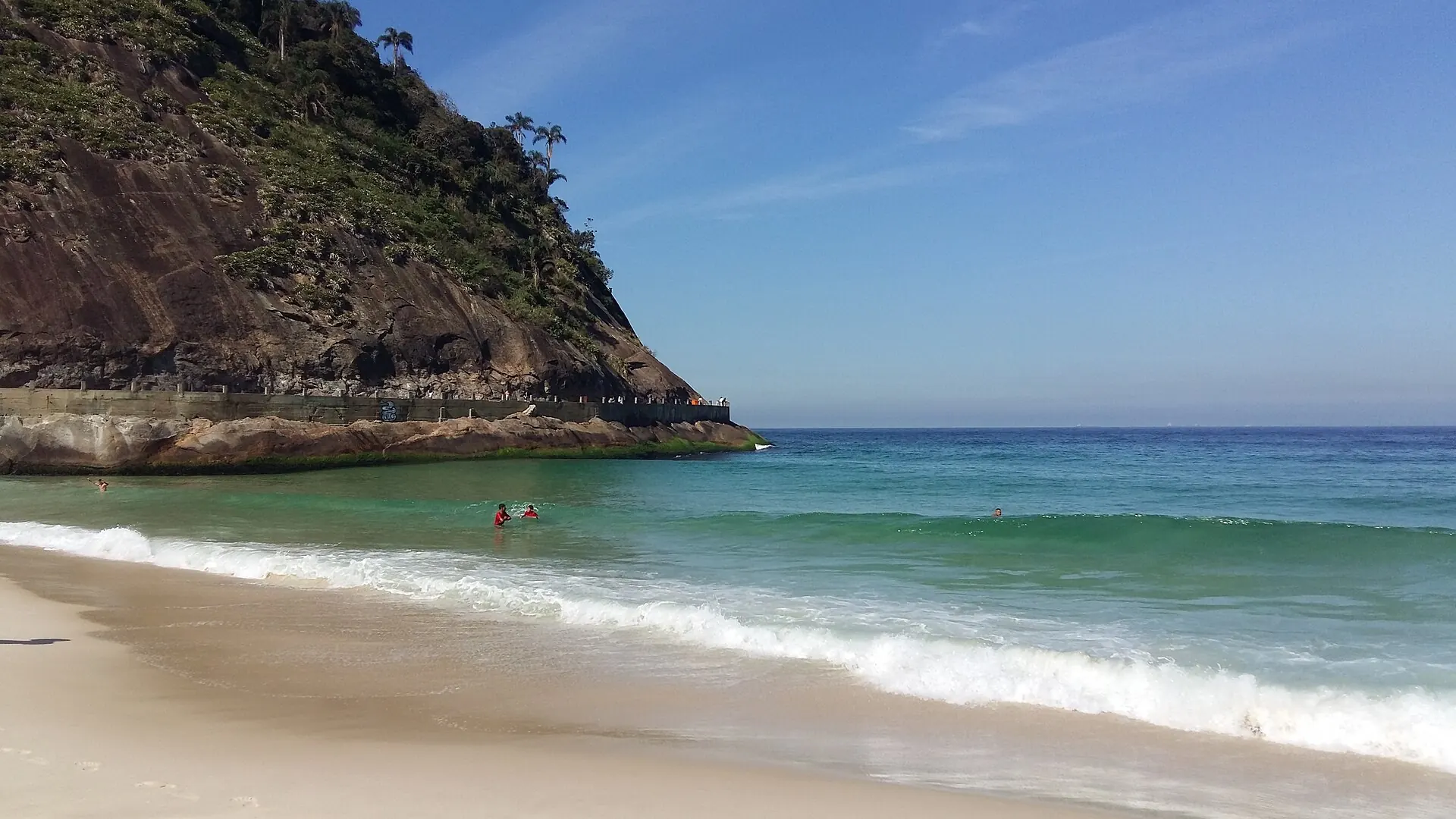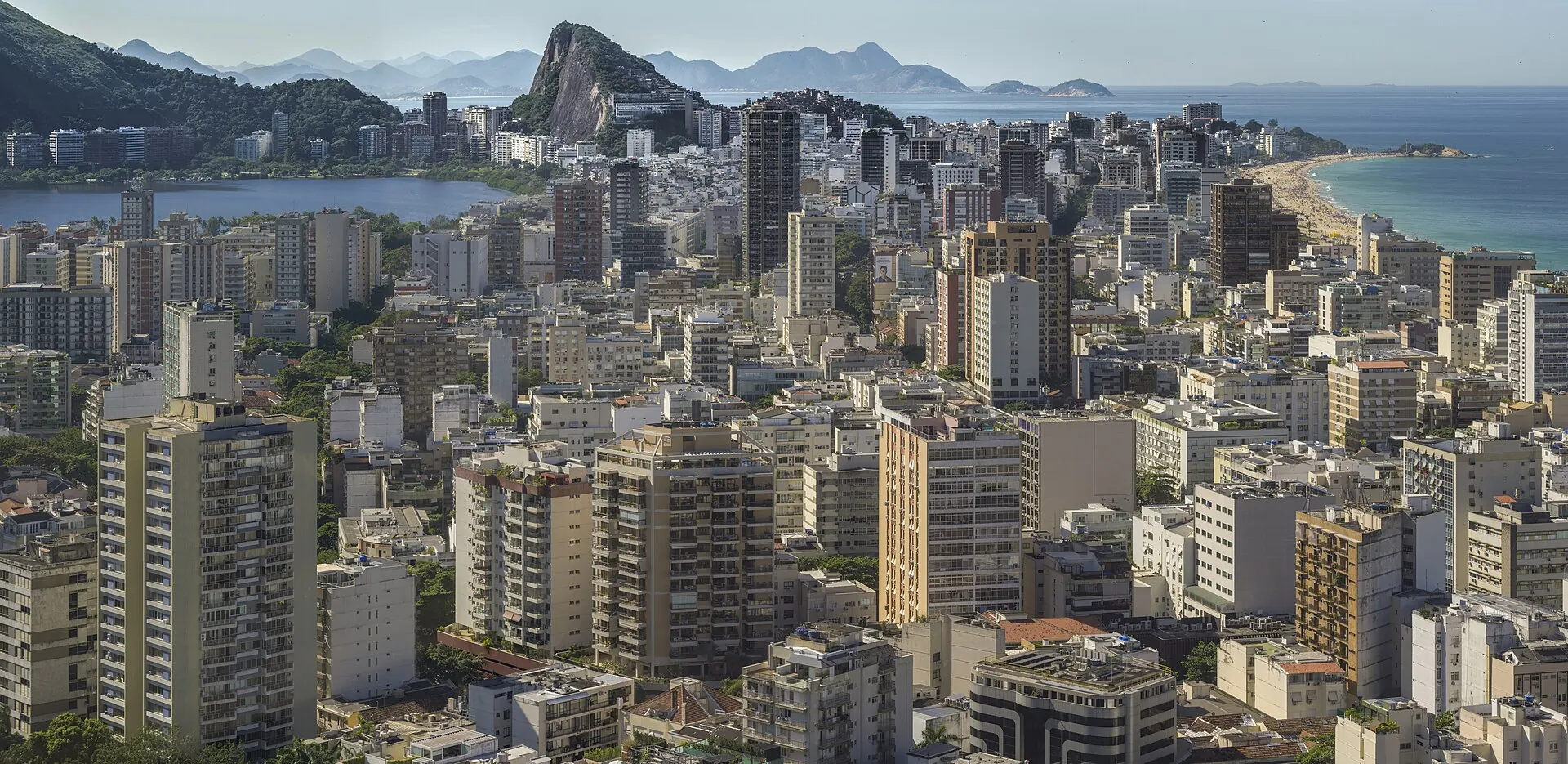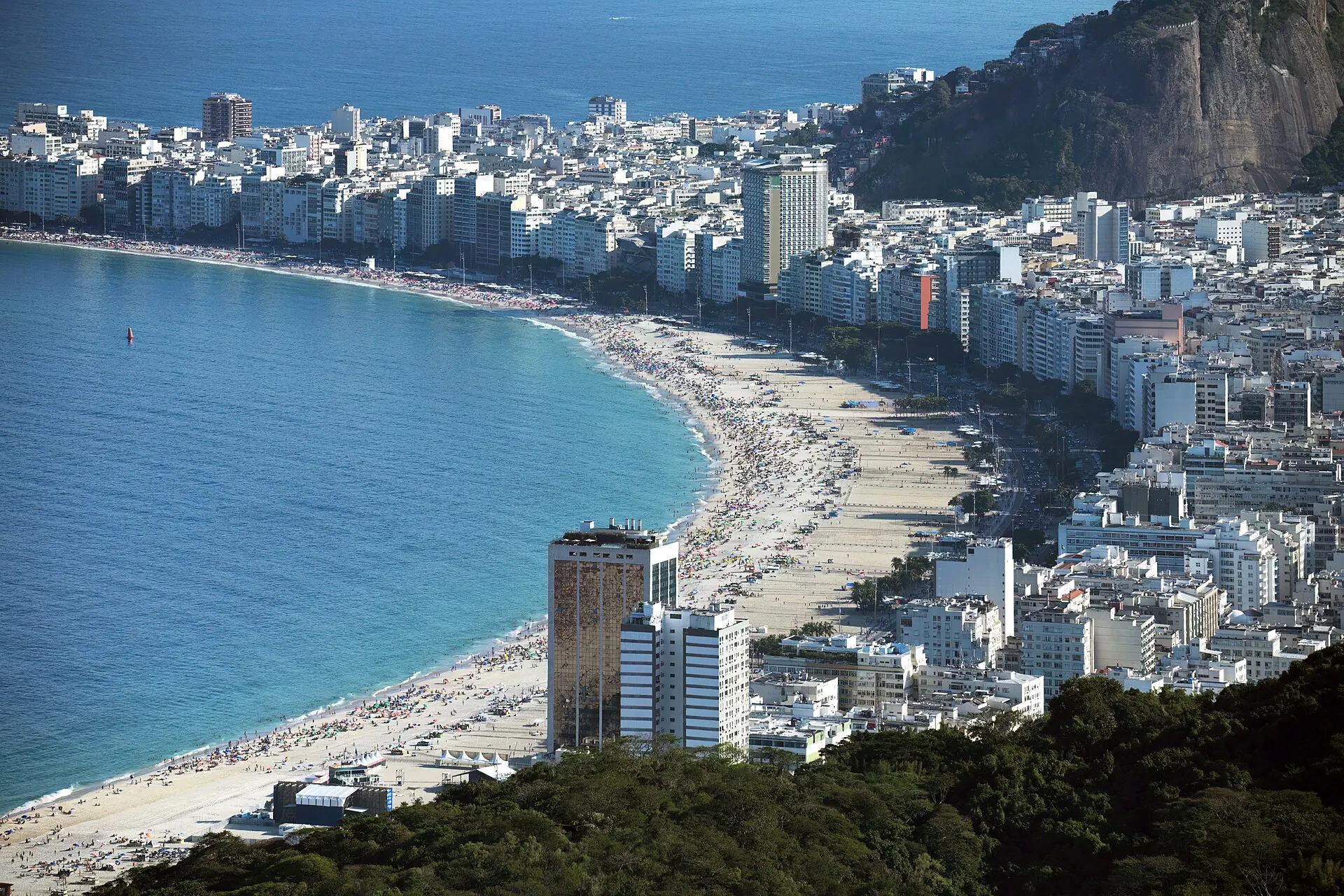
In Copacabana you can live in a city of more than six million people and cross the avenue to an Atlantic beach. Buying here means choosing a stretch, then a building, then a flat, and knowing what each costs to run. This guide covers how one Copacabana address differs from another, what the buildings are like, the monthly and yearly costs, what to check in an older building, what published asking prices show and the purchase steps for a buyer from abroad. It's orientation from people who sell homes here, not legal or tax advice.
- Average asking price
- R$ 13,811 per m² in Copacabana (FipeZap, September 2026)
- Transfer tax (ITBI)
- 3% of the value, the Rio rate since 1 January 2018
- Property tax (IPTU)
- Yearly; in 2026, 7% off for one payment or up to 10 instalments
- Building inspection
- At least every five years under Rio's 2013 law
- Taxpayer number
- CPF, issued free by the Receita Federal
- ADV 001
- For sale at R$ 33,000,000 through Art de Vivre
Copacabana's stretches and how they differ
Copacabana runs the length of its beach, and where you buy along it shapes daily life more than the address suggests.
- Leme: the northern end, past Avenida Princesa Isabel, quieter and more residential, with the beach running up to the Pedra do Leme and a trail through the forest to the fort above it. Cardeal Arcoverde is the nearest metro station. Our Leme guide walks it.
- The Avenida Atlântica frontage: the buildings facing the sand, with the sea view and the promenade on the doorstep, and the traffic of the avenue below. This is the stretch most buyers picture first, and the one where light, noise and the view vary most from floor to floor.
- The inner streets: Rua Barata Ribeiro, Avenida Nossa Senhora de Copacabana, Rua Tonelero and the cross streets between them are lined with apartment buildings over shops, supermarkets, pharmacies and cafés, with the three metro stations below. Daily errands are easiest here, and the beach is a few blocks away.
- The Posto 6 end: the southern tip by the Forte de Copacabana, a short walk from Arpoador and Ipanema, with the metro at Cantagalo or at the Rua Sá Ferreira entrance of General Osório station.
Walk your chosen stretch at different hours before you decide: a street that's calm on a Tuesday morning can be lively by Saturday evening.
What the buildings are like
One Copacabana block can hold buildings from several decades side by side, so judge each building on its own merits. The best-loved older stock is Art Deco: the style reached Rio from 1930, and Copacabana kept fine examples. At Rua Ronald de Carvalho 166, a building finished in 1932 still has its Art Deco front door framed in stained glass by Gastão Formenti; it was put up as a hotel and became residential after one of its partners died. On Avenida Nossa Senhora de Copacabana, the Edifício Itahy at number 252 has a door topped by a mermaid over a pattern of seaweed, designed by Pedro Correa de Araújo.
For a buyer, the age of the building matters as much as the flat. A handsome 1930s lobby can sit above old wiring and pipes, while a plainer later building may have had its lifts, facade and plumbing renewed. Ask for the year the building was completed and the works done since, and read the building's inspection report, described below, before you make an offer.
Doormen, lifts and garage spaces
Find out whether the building has a portaria, a front desk with a doorman, and which hours it's staffed. The doorman takes deliveries, controls who goes up and knows everyone in the building. Staff wages are paid through the condominium fee, so the number of employees is one of the first questions to ask.
Look at the lifts: how old they are, when they were last modernised and whether there's a separate service lift. In an older building, ask whether the electrical supply to the flat can run air conditioning in every bedroom, and whether the building's main wiring has been upgraded to match.
Don't assume a parking space comes with the flat. Ask whether one does, whether it's recorded in the property's registry entry or only allocated by the building, whether it's a fixed or a rotating space, and what the building's rules say about renting it out.
The condominium fee and IPTU
Two running costs come with every flat in Copacabana.
The condominium fee (condomínio) is the monthly charge that runs the building: staff, cleaning, lifts, water and power for the common areas, insurance, maintenance and a reserve fund. Big works, such as a new facade or new lifts, are often paid for with extra charges voted at an owners' assembly. Before you make an offer, ask for the last few months of statements, the minutes of recent assemblies and any extra charges already approved, and get a statement that the flat's fees are paid up to date.
IPTU is the city's annual property tax. In 2026, owners who paid the whole year in one go by 6 February had a 7% discount, and the rest could spread it over up to ten monthly instalments; the terms are set each year. Ask the seller for the current bill and proof that past years are paid before you sign.
Checking an older building
Rio's building inspection law, Complementary Law 126 of 2013, requires a technical inspection at least once every five years, carried out by a licensed engineer or architect registered with their professional council, to check the building's conservation, stability and safety. The building's management, usually the síndico (the elected building manager), then reports to the Prefeitura online that the building is in sound condition. Houses with one or two homes are exempt, and so are new buildings for their first five years after the habite-se, the certificate that allows them to be occupied.
That report is the best single document a buyer can read. Ask for:
- the latest inspection report and proof that it was reported to the city;
- the minutes of the last two or three owners' assemblies, which show disputes, planned works and extra charges;
- the size of the reserve fund;
- works on the facade, roof, lifts, pipes or gas lines in recent years, and what's still pending;
- whether the flat's own wiring, plumbing and windows have been redone, and whether past alterations were approved by the building.
Then have an engineer or surveyor you hire yourself look at the flat and the common areas. On a building several decades old, it's money well spent.
Prices per square metre
The FipeZap index, run by Fipe with the Zap, Viva Real and OLX property sites, tracks asking prices in online property adverts. In its September 2026 report, the average asking price for homes in Copacabana was R$ 13,811 per m², against R$ 11,302 per m² for the city of Rio as a whole. Next door, Botafogo stood at R$ 13,555 per m²; Ipanema was at R$ 26,996 and Leblon at R$ 28,837.
Read those figures as context, not a price list. They average asking prices across the whole neighbourhood, from a studio on an inner street to a seafront apartment, so a particular flat can sit far above or below them. Floor, view, light, a garage space and the state of the building and the flat all move the price, and the final figure is agreed between buyer and seller.
The purchase steps for a buyer from abroad
Buying from abroad follows a clear order, and a Brazilian property lawyer and a licensed broker steer you through it.
- Get a CPF. Brazil's taxpayer number is issued free by the Receita Federal. If you live abroad, fill in the online form for residents abroad, then present the protocol and your documents to a Brazilian consulate or to the Receita.
- Make an offer. Put it in writing; your broker and lawyer agree the terms with the seller, including any deposit.
- Check the certificates. Your lawyer should pull an up-to-date certificate of the property's registry entry, showing the owner and any charges on it, plus searches on the seller and statements that IPTU and condominium fees are paid.
- Sign the deed. The escritura, the public deed of sale, is normally drawn up and signed at a notary's office, a tabelionato de notas.
- Pay the ITBI and register. Rio's property transfer tax is 3% of the value, the rate set by Municipal Law 6,250 of 2017 and in force since 1 January 2018; ask your lawyer to check the value it's charged on before you pay. The deed then goes to the Registro de Imóveis, the property registry, and only that registration makes you the owner.
Work only with a broker registered with CRECI-RJ, the brokers' council for the state of Rio. Ask to see the professional ID card and check the registration in the public search on the council's website.
ADV 001 for sale
ADV 001 is a duplex penthouse on the 13th floor of a building on Avenida Atlântica, facing Copacabana beach: five suites, seven bathrooms and 848 m² over two floors, with a private rooftop pool, a sauna and a jacuzzi, and views of Christ the Redeemer, Sugarloaf and the Atlantic. Art de Vivre has it on the market at R$ 33,000,000. To arrange a visit, contact Art de Vivre; the listing broker is Charles Jonas (CRECI-RJ 009278/O).
This page is general orientation, not legal or tax advice. Rules, rates and fees change, so take advice from a Brazilian lawyer and accountant before you buy.
Questions
How much does an apartment in Copacabana cost per square metre?
In FipeZap's September 2026 report, the average asking price for homes in Copacabana was R$ 13,811 per m², against R$ 11,302 for Rio as a whole. It's an average of asking prices in online adverts across the whole neighbourhood, so a specific flat can be well above or below it.
What is the property transfer tax (ITBI) in Rio?
Rio's ITBI rate is 3% of the property's value, set by Municipal Law 6,250 of 2017 and in force since 1 January 2018. Ask your lawyer to check the value it's charged on, and the amount, before the deed is signed.
How do I get a CPF if I live abroad?
Fill in the Receita Federal's online form for residents abroad, then present the protocol and your documents, starting with an official photo ID, to a Brazilian consulate or the Receita. Registration is free, although partner offices in Brazil charge R$ 7. Requests handled by email take about 48 hours on average.
What is the autovistoria?
It's Rio's periodic building inspection, required by Complementary Law 126 of 2013. A licensed engineer or architect inspects the building at least every five years, and the building's management reports the result to the city. Ask for the latest report before you buy a flat in an older building.
How is IPTU paid in Rio?
IPTU is the city's annual property tax. In 2026, owners could pay the whole year by 6 February with a 7% discount, or spread it over up to ten monthly instalments. The terms are set each year, so ask the seller for the current bill and proof that past years are paid.
How can I check that a broker is licensed in Rio?
Ask to see the broker's professional ID card from CRECI-RJ, the brokers' council for the state of Rio, which proves the broker is in good standing. You can also look the name up in the public search for brokers and agencies on the CRECI-RJ website before you sign anything.
Sources
- Receita Federal (gov.br): Inscrever no CPF, for foreigners and residents abroad
- Municipal Law 6,250 of 28 September 2017 (Rio de Janeiro), ITBI rate of 3%
- Índice FipeZap, residential sale, September 2026 report
- CRECI-RJ, the Rio de Janeiro brokers' council
- CRECI-RJ: how to identify a licensed professional
- MetrôRio: Siqueira Campos station
- MetrôRio: General Osório station
- IRIB (Instituto de Registro Imobiliário do Brasil): property without registration
- Diário do Rio, 23 December 2025: IPTU 2026 in Rio (the Prefeitura's schedule)
- Complementary Law 126 of 26 March 2013 (Rio de Janeiro), building inspection (autovistoria), text as reproduced by SíndicoNet
- Jornal do Brasil, 22 January 2019: Rio's Art Deco doors and gates