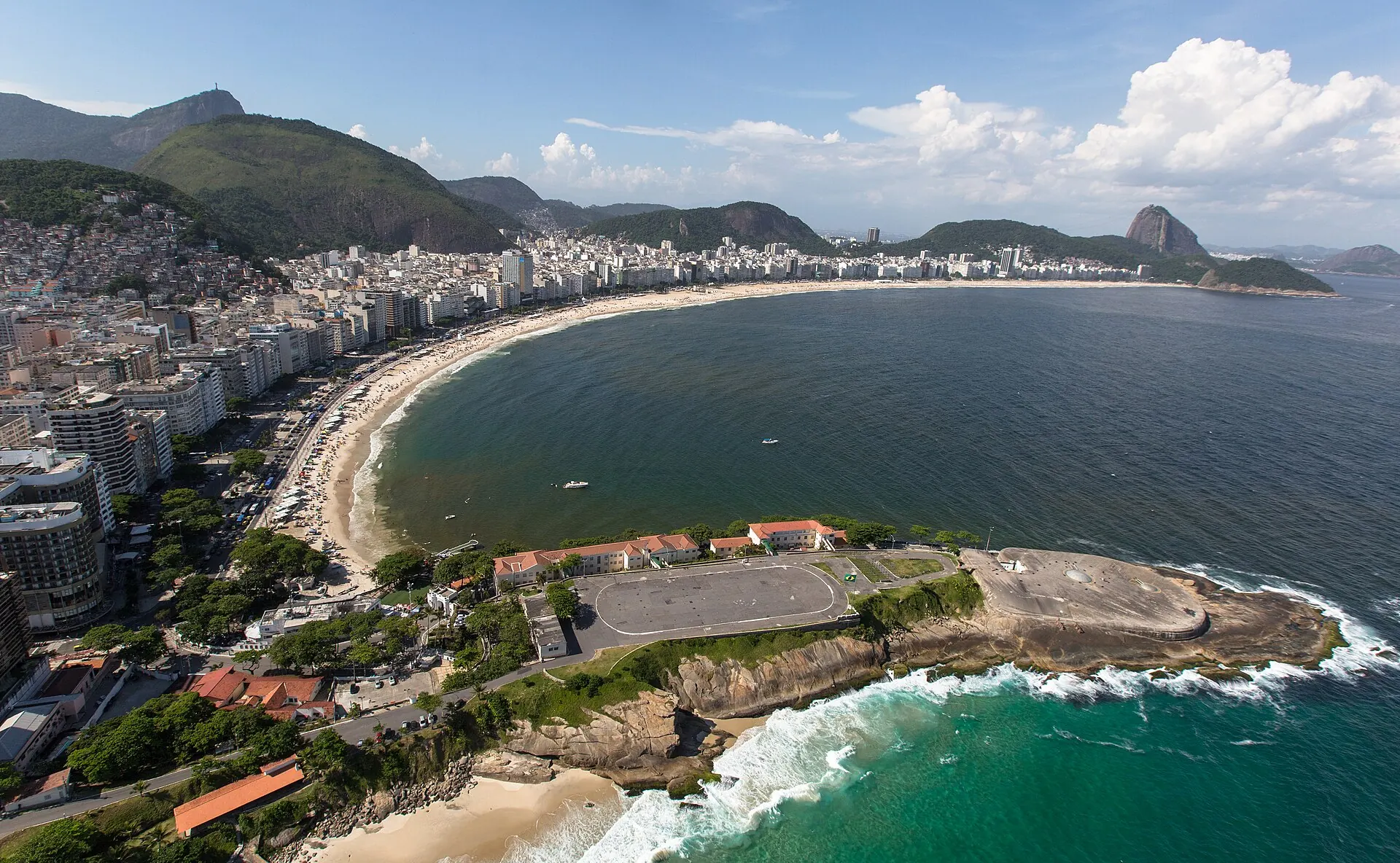
Leme is the northern end of Copacabana beach, where Posto 1 stands and the sand runs out against a forested hill. It's the end of the beach for walking and climbing: a stroll along the fishermen's path at the foot of the rock, a cobbled trail up through the trees to an 18th-century fort with a view over the whole crescent, and, on the hill behind, the Babilônia and Chapéu Mangueira communities, with a trail and projects of their own. You can do all of it in a morning, wherever you are staying on Avenida Atlântica.
- Where
- Copacabana's northern end, around Posto 1
- Forte Duque de Caxias
- Usually Tuesday to Sunday, 9.30am to 4pm; closed on Mondays
- Fort tickets
- About R$ 10 in 2026, free on Tuesdays; cash or Pix only
- Fort trail
- About 800 metres of cobbled road, 20 to 30 minutes up
- Babilônia trail
- About 30 minutes from the top of Chapéu Mangueira; go with a local guide
The beach at Leme
Copacabana has a military fort at each end of the beach, and Leme is the end with the forest. The sand is the same long curve as the rest of Copacabana, but the apartment blocks stop at the foot of the Morro do Leme, and the last stretch below Posto 1 feels more like a neighbourhood beach than a city one. At the very end, by the rocks, stands a statue of the writer Clarice Lispector, and just beyond it the square where the fort trail begins.
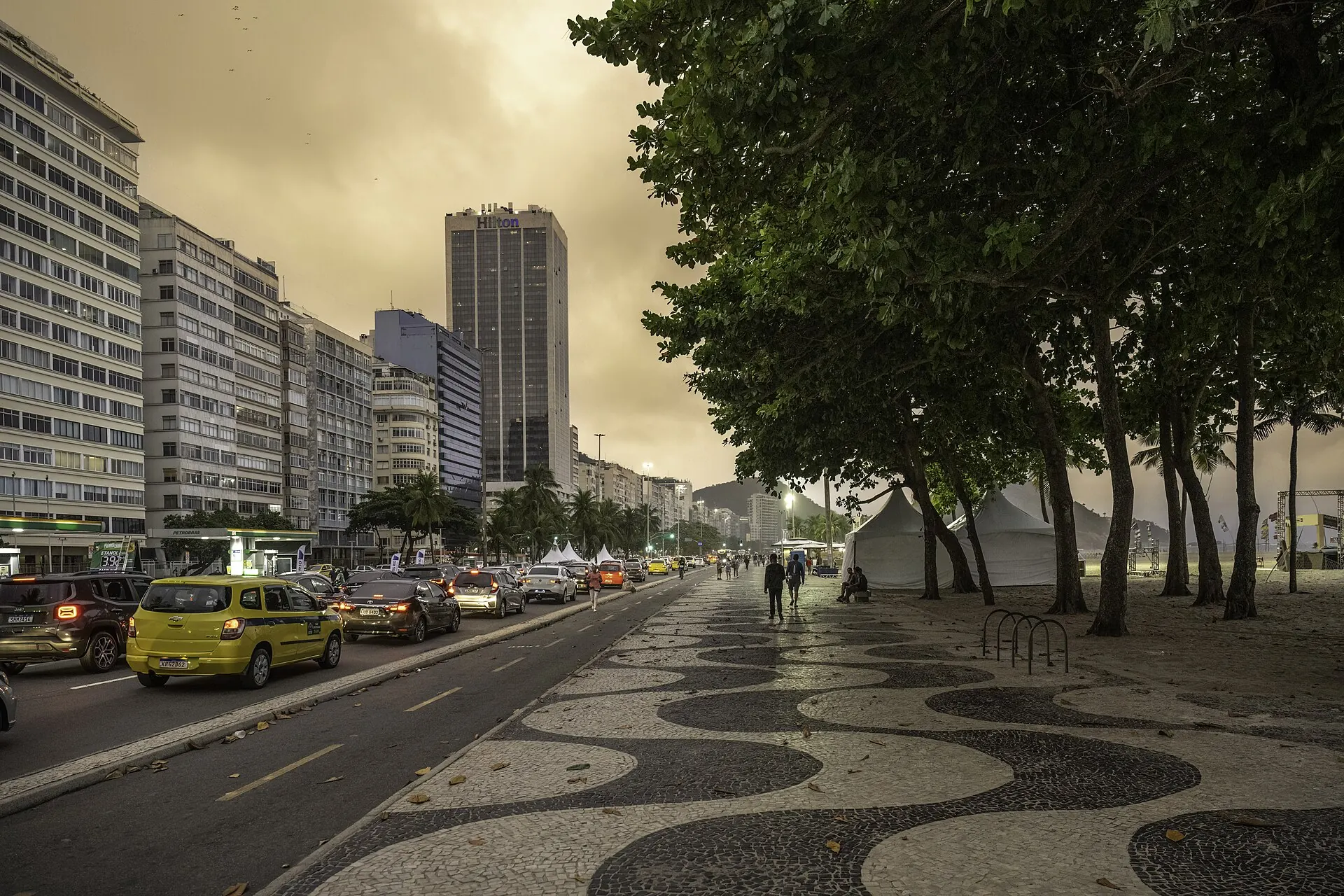
Leme uses the same lifeguard posts and flags as the rest of the beach, and the same Sunday leisure lane on Avenida Atlântica; both are explained in our beach and promenade guide.
The fishermen's path round the rock
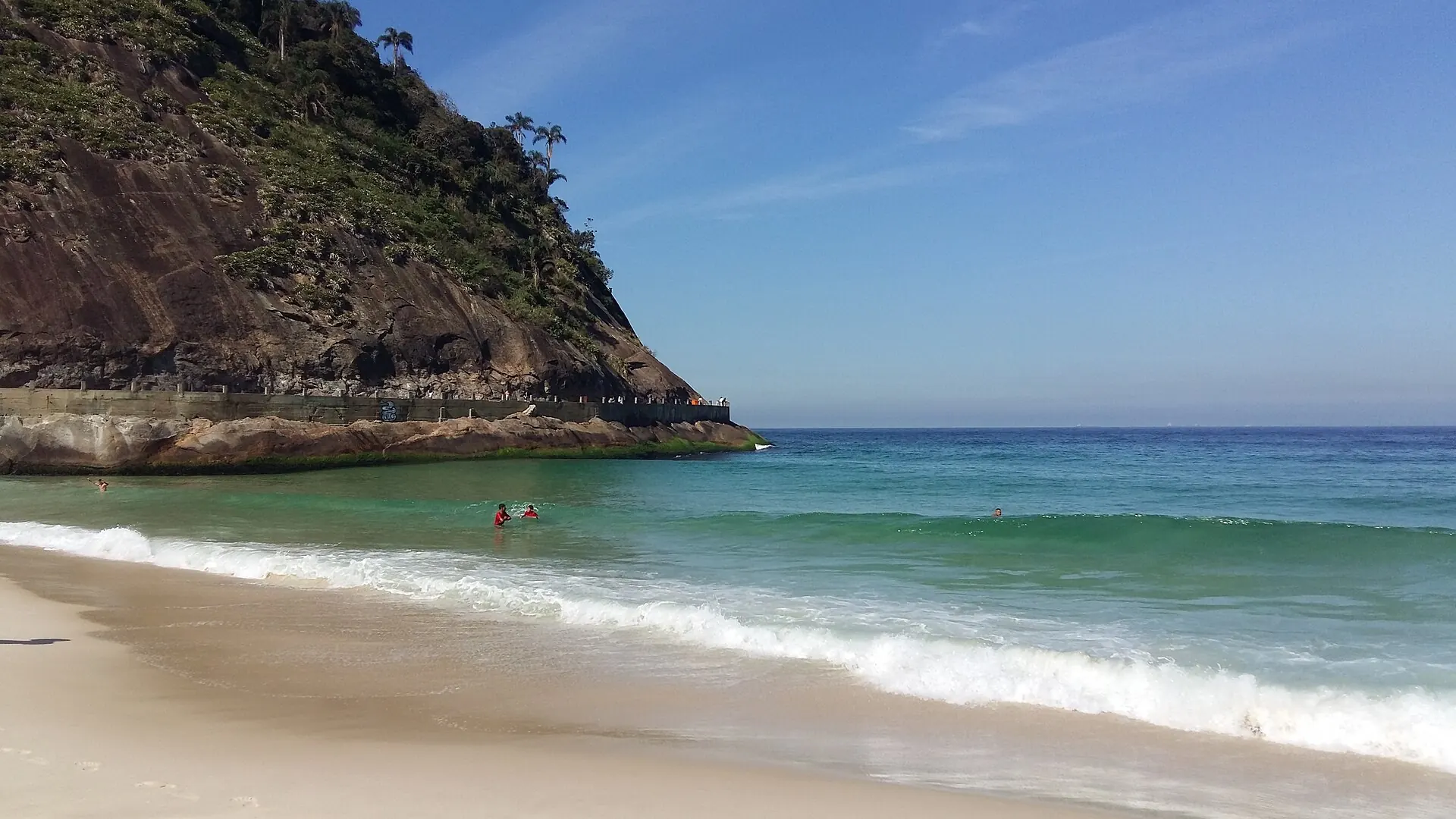
Where the beach ends, a low wall and a paved walkway run out along the foot of the rock. This is the Mureta do Leme, which Cariocas also call the Caminho dos Pescadores, the fishermen's path, after the many anglers who cast their lines from it. It's an easy walk with the sea on one side and the rock on the other, and from the far end you can see the whole curve of Copacabana, as far as the fort at Posto 6. Early morning is the time to go, when the fishermen are out and the air is still cool. On rough days, keep well back from the edge.
Forte Duque de Caxias
The fort on top of the hill is the Forte Duque de Caxias, still widely called the Forte do Leme. It was built between 1776 and 1779 on the orders of the Marquês de Lavradio, to protect the city. At first it carried no artillery at all: as the Forte do Vigia, its job was to watch for ships and signal their approach. After the proclamation of the Republic it was renamed the Forte do Leme in 1895, and in 1935, under Getúlio Vargas, it officially took the name of the Duque de Caxias.
The trail up to the fort
You start at Praça Almirante Júlio de Noronha, the square at the end of the beach, and pass the guardhouse. From there a cobbled road climbs about 800 metres through the trees, with the Stations of the Cross set along the way. It's easy to moderate, steep in places, and most people reach the top in 20 to 30 minutes at a comfortable pace. Keep an eye on the branches, where marmosets and birds are a common sight. The hill is an environmental protection area, so leave single-use plastic at home and carry your rubbish back down.
The view from the top
From the walls you see the whole beach, from Leme to the Forte de Copacabana, along with Sugarloaf, Christ the Redeemer, the mouth of Guanabara Bay, the peaks of the Tijuca forest and part of the Niterói shore. A map of the bay is drawn on the ground, and binoculars help you pick out the landmarks.
Toilets and a drinking fountain are up the stairs on the left just before the entrance gate. Nothing is sold at the top and no cups are handed out, so bring a bottle you can refill. Inside the walls there's almost no shade, so a hat and sunscreen are essential.
Fort tickets and opening hours
The Forte Duque de Caxias is usually open Tuesday to Sunday, from 9.30am to 4pm, and closed on Mondays. In 2026 a full ticket is about R$ 10, and students, teachers and ID Jovem holders pay half, R$ 5. Tuesdays are free for everyone, though a Tuesday holiday can be different, and entry is free on any day for people over 60, children under 10, people with disabilities, the military and their families, tour guides and residents of Leme and Copacabana with proof. Pay at the guardhouse in cash or by Pix; cards aren't accepted. Check before you go, as the rules can change.
Babilônia and Chapéu Mangueira
On the slopes behind Leme live two communities, Babilônia and Chapéu Mangueira. The hill has its place in film history: the French director Marcel Camus filmed Black Orpheus on it. Today it's better known for what residents have built. Revolusolar, a solar-energy organisation founded on Morro da Babilônia in 2015, set up the first solar cooperative in a favela in 2021. Favela Orgânica, started by the chef Regina Tchelly, who lives in Babilônia, teaches a way of cooking that uses every part of the ingredients and cuts waste, and it has taken its workshops and talks to other states and abroad.
To find the communities' own restaurants, bars, studios and cultural spaces, use Descubra Favelas, a free guide to six Rio favelas, Babilônia among them, written by the Instituto Aupaba together with residents, cultural collectives and local businesses.
The Babilônia trail
The hill has a trail of its own. From Leme you walk up through Chapéu Mangueira to the top of the community, where the path begins, and it's about 30 minutes of easy walking to the summit. A viewpoint near the start looks over Copacabana, and the best of all, the Mirante do Telégrafo, takes in the bays of Botafogo and Flamengo, with Christ the Redeemer behind and Sugarloaf close by. Plaques along the way tell the hill's history, and you pass military ruins dating from the Empire to the Second World War, among them a camouflaged casemate.
Walk it with a guide from the community, who knows the way and the hill's stories, and whose fee stays in the community. The Art de Vivre concierge can arrange a local guide.
Eating and drinking in Leme
For a long lunch, Marius Degustare at Avenida Atlântica 290 serves an all-you-can-eat rodízio of meat, fish and shellfish, with a hot and cold buffet, under a ceiling hung with a jumble of objects that's worth the visit on its own. It made Tripadvisor's 2025 Travellers' Choice list of fine-dining restaurants. S Bistrô, the French bistro on the Leme seafront, is one of our own favourites, so you'll find it on our concierge page rather than here.
For a beer after the walk, the neighbourhood's long-running botecos are in Copacabana's classic bars, and Descubra Favelas lists the hill's own kitchens. To plan a stay near the beach, get in touch.
A morning in Leme
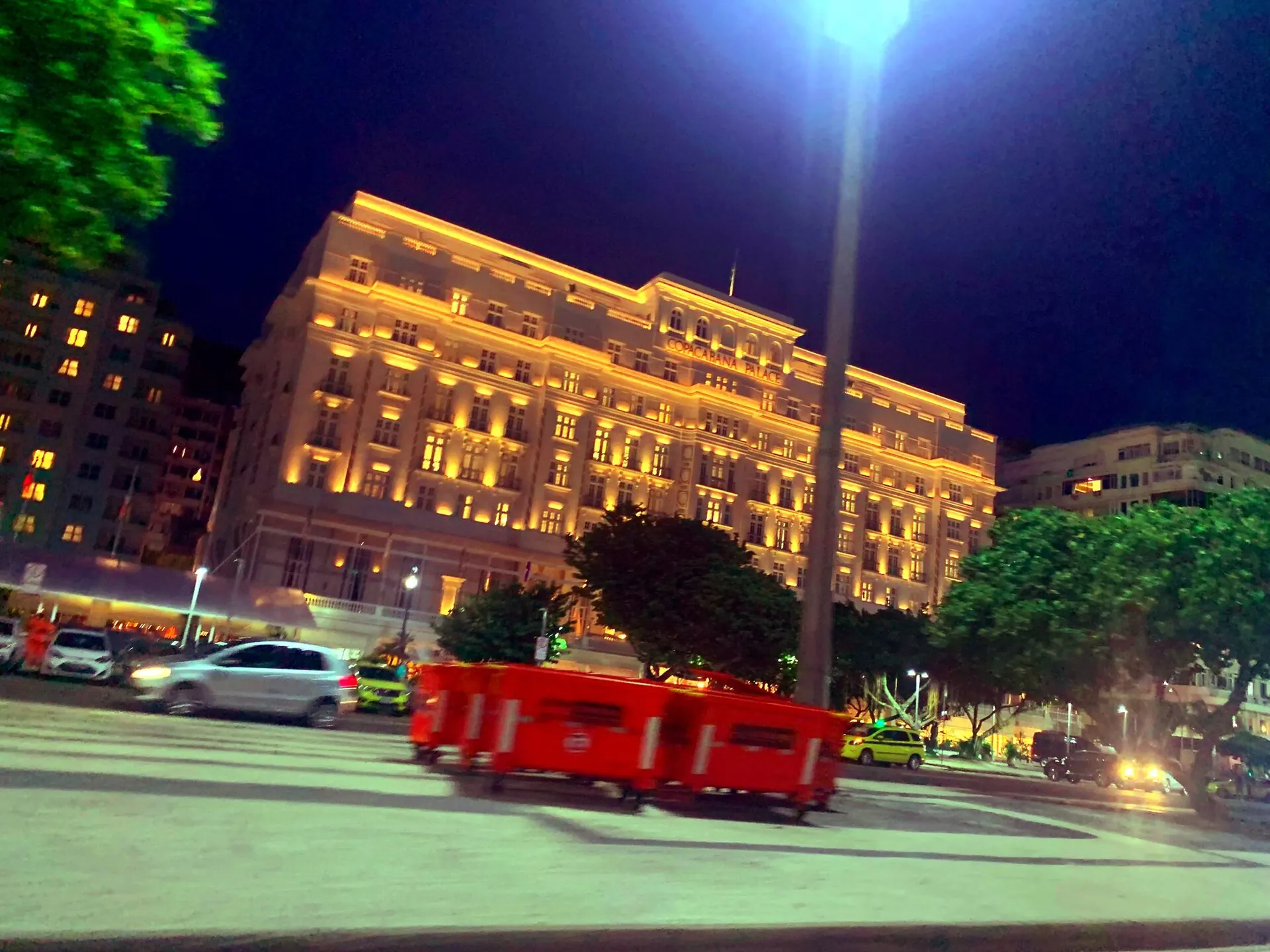
Mornings suit Leme best. Be at the guardhouse when the fort opens at 9.30am and climb while the air is cool, then come down for the fishermen's path and a swim if the lifeguards' flag is green. After that, lunch at Marius, or walk back along the promenade to the Copacabana Palace on Avenida Atlântica. To take in the beach's other end the same day, the Forte de Copacabana at Posto 6 is usually open until 7pm from Tuesday to Sunday.
Questions
Is the Forte Duque de Caxias open on Mondays?
No. Its hours are usually 9.30am to 4pm, Tuesday to Sunday. In 2026 nobody pays on Tuesdays (a Tuesday holiday can differ); other days cost about R$ 10, paid at the guardhouse in cash or by Pix.
How hard is the trail to the Forte do Leme?
It's a cobbled road of about 800 metres, easy to moderate and steep in places. Most people take 20 to 30 minutes. Wear trainers, carry water and start early, while it's still cool.
What is the Caminho dos Pescadores?
It's the walkway along the Mureta do Leme, at the foot of the rock where the beach ends, named after the fishermen who cast their lines from it. It's an easy stroll with the whole beach curving away behind you.
Can visitors walk up to Babilônia and Chapéu Mangueira?
Yes, and the best way is with a guide from the community, who can take you up the Babilônia trail to the Mirante do Telégrafo and introduce residents' projects such as Favela Orgânica and Revolusolar. A local guide can be arranged through the Art de Vivre concierge.
Where can I eat in Leme?
Marius Degustare on Avenida Atlântica serves a rodízio of meat, fish and shellfish, and S Bistrô, the French bistro on the seafront, is on our concierge page. For the hill's own kitchens, look at the Descubra Favelas guide.
Sources
- Revolusolar: about the organisation (founded on Morro da Babilônia)
- Instituto Aupaba: Descubra Favelas guide
- RioOnWatch: The Community We Want, Morro da Babilônia @ Rio+20 (2012)
- Rio Film Commission (Prefeitura do Rio): Copacabana Beach
- Portal Viva: Descubra a Favela guide and Favela Orgânica (October 2025)
- Fui Ser Viajante: Forte do Leme, trail, hours and tickets (updated September 2026)
- TudoGostoso: Forte Duque de Caxias lookout in Leme (October 2023)
- Mala de Aventuras: the Morro da Babilônia trail (updated August 2024)
- Melhores Destinos: Marius Degustare, Leme
- Travel.com.br: Tripadvisor Travellers' Choice 2025 restaurants (September 2025)
- Catraca Livre: Forte de Copacabana, hours and tickets (updated July 2024)