Lapa, a few metro stops from Copacabana, packs a lot into a few streets. A Chilean artist's staircase, covered in thousands of tiles, climbs from Lapa up to Santa Teresa. A long white aqueduct from the 18th century, with a tram running along the top, frames the main square. A short walk away stands a cathedral shaped like a giant concrete cone. Come in the morning for the steps and the sights, and come back after dark for the old bars and the samba.
- Where
- Rua Joaquim Silva in Lapa, up to Rua Pinto Martins in Santa Teresa
- From Copacabana
- Line 1 of the metro to Cinelândia or Carioca, then a 15-minute walk
- Cost
- the steps and the Arches are free to see
- Cathedral
- open every day, 7 am to 5 pm
- Best time
- the steps in the morning; Lapa's bars after dark
Jorge Selarón and his staircase
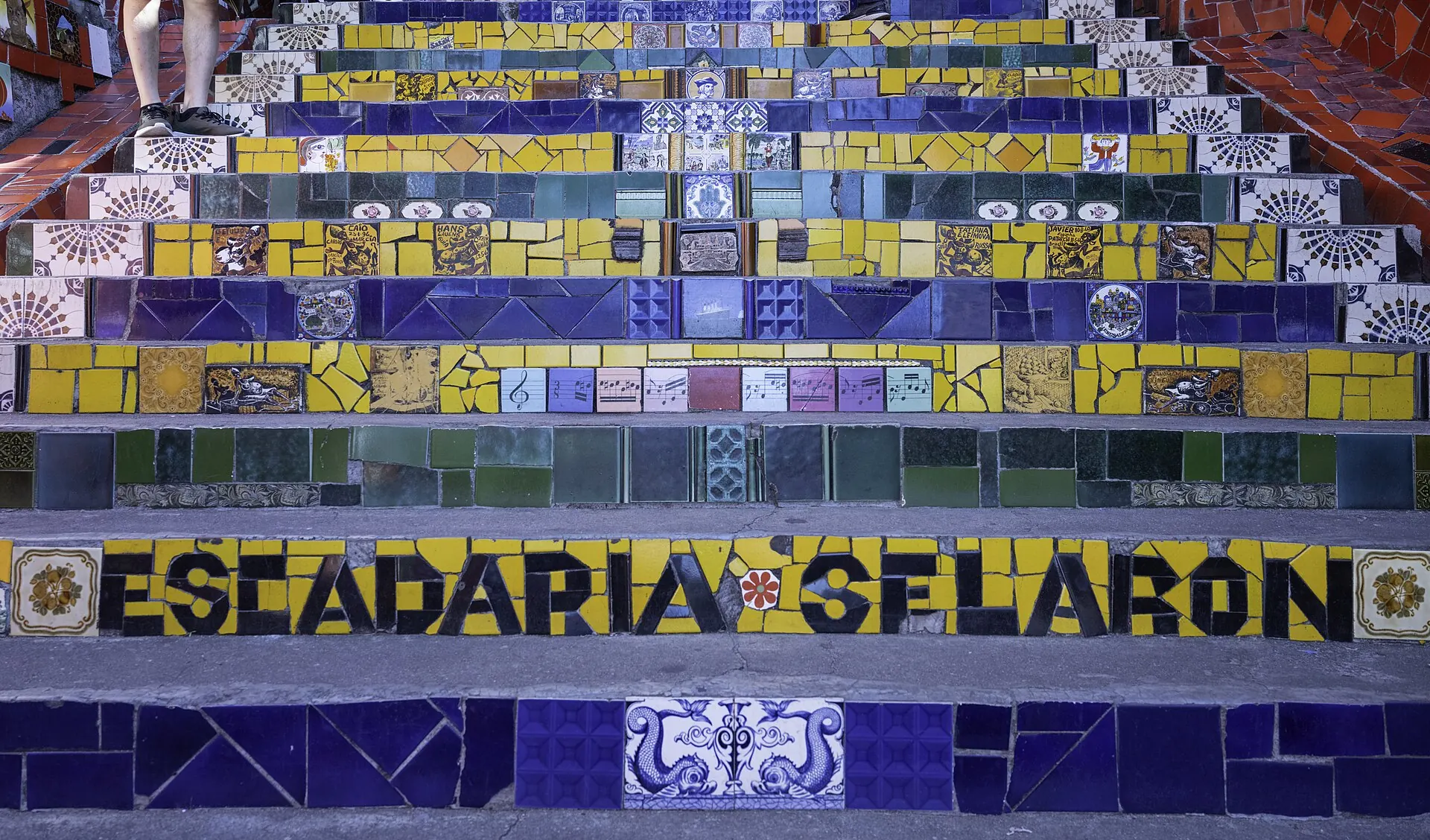
Jorge Selarón came from Valparaíso in Chile and travelled through more than 50 countries before making Brazil his home. In 1990 he moved into a house on a run-down flight of steps between Lapa and Santa Teresa and began covering it in tiles, as a tribute to the Brazilian people and to Rio. His first designs were green and yellow, from a Brazilian-flag pattern he made with neighbours in 1994, the World Cup year. Red took over in the 2000s: it was the colour of Ferrari, he said, and the most beautiful colour in the world.
The staircase climbs 215 steps over 125 metres, from Rua Joaquim Silva in Lapa to Rua Pinto Martins in Santa Teresa, and the mosaic is made of 4,994 tiles from 165 countries. Selarón lived off the sale of his paintings, collected tiles on his travels and was given many more by visitors and neighbours, so look out for one from your own country. One figure appears again and again, a pregnant Black woman he never explained, and on one tile he swapped her face for his own.
His paintings are less well known than the steps. In mid-2025 the Centro Cultural Justiça Federal, in the centre, showed 370 of them with photographs, sketches and tiles, in an exhibition put together by the city's independent tour guides' league: scenes of Cinelândia, Lapa and the Central do Brasil station, and the pregnant women who fill thousands of his works. Selarón died in January 2013, at 65. The city had listed his staircase as heritage in 2005, and it stays free to visit at any hour.
Visiting the steps
- When: in the morning, while it's cooler.
- Cost: free; the staircase is a public street, officially Rua Manuel Carneiro.
- Which way: start at the bottom on Rua Joaquim Silva and climb, so the whole mosaic rises in front of you; at the top you're in Santa Teresa.
- How long: the climb takes minutes, but give the tiles half an hour.
- Neighbours: houses line the staircase and people live in them, so keep doorways clear when you stop for photos.
On the busy steps, keep valuables out of sight and your phone close; our note on staying safe in Rio has the usual city sense. Sabor Peruano, the small Peruvian restaurant near the steps that our team loves, is on our concierge page.
The Arcos da Lapa
The white arches at the centre of Lapa are the Aqueduto da Carioca, built between 1723 and 1750 to carry water from the Carioca River into the city, where it fed the fountain at the Largo da Carioca. The engineer José Fernandes Pinto Alpoim designed it in stone and lime to replace an earlier wooden structure, and its 42 Roman-style arches run 270 metres and stand 17 metres high. IPHAN, the national heritage institute, listed it in 1938.
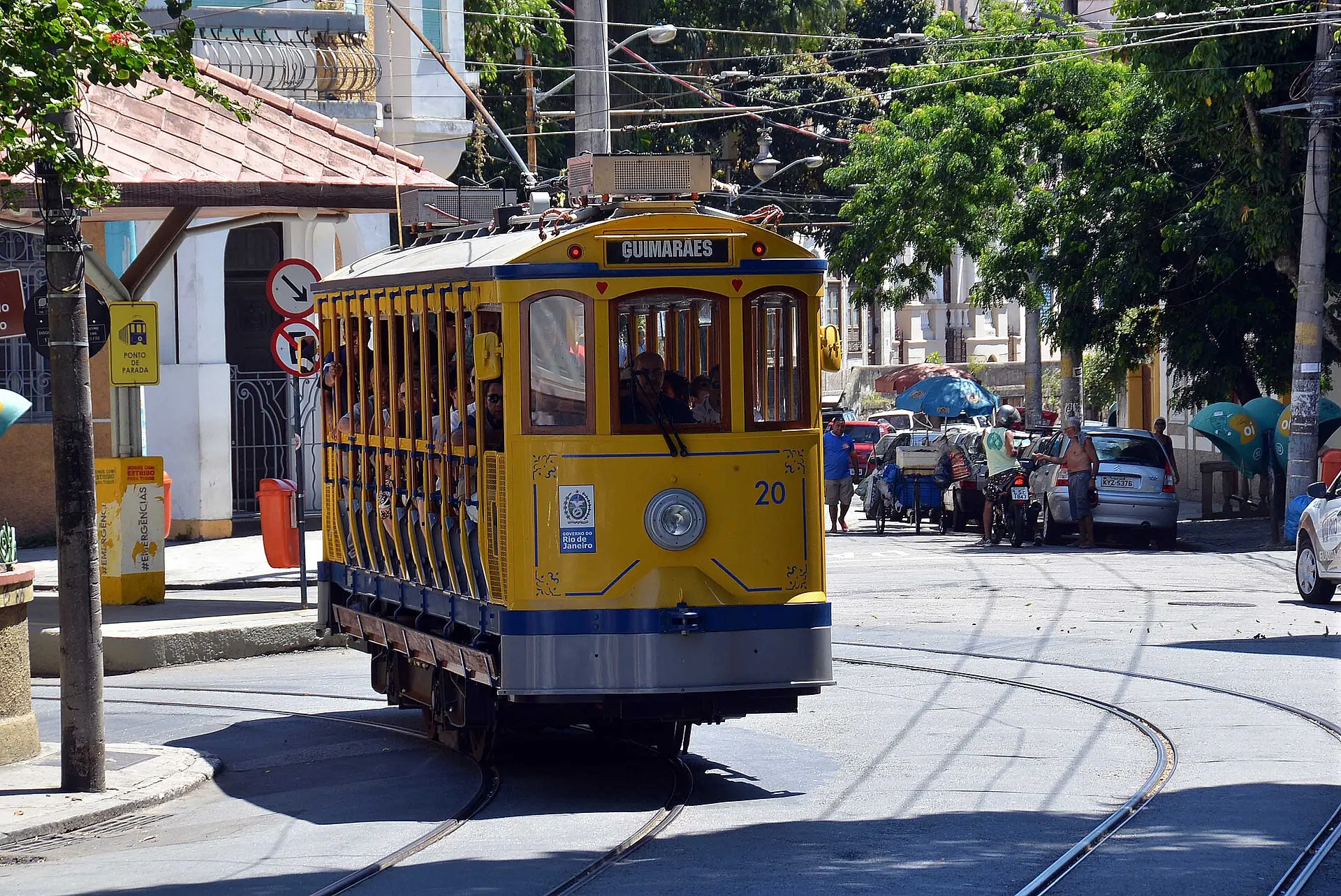
On 1 September 1896 the aqueduct began its second life as a viaduct for the Santa Teresa tram, and the bonde still crosses the top; our Santa Teresa guide has the routes and fares. In 2026 the city cleaned and limewashed the whole structure with a quicklime mortar, for about R$ 1.7 million, renewed the Praça Cardeal Câmara at its feet and cleaned two panels by Selarón there, A Lapa and Arcos da Lapa. The square under the arches is the best spot for a photo with the tram on top.
The Metropolitan Cathedral
A short walk from the Arches, at Avenida República do Chile 245, the Catedral Metropolitana de São Sebastião looks like nothing else in Rio: a concrete cone 75 metres high and 106 metres across, inspired by the Mayan pyramids of Chichén Itzá. The architect Edgar de Oliveira da Fonseca designed it. The foundation stone was laid on 20 January 1964, the first Mass was said at Christmas 1972, and the cathedral was dedicated on 15 August 1979. There are no columns inside, and it holds up to 20,000 people standing or 5,000 seated.
Step inside for the light. Four stained-glass windows, green, red, blue and yellow, rise up the walls and meet at the top in a cross of clear glass, and the colours inside change through the day. Over the altar hangs a six-metre bronze crucifix by Humberto Cozzo, installed in 1979; the bell tower followed on 7 July 1985, and the cathedral's museum of sacred art holds more than 5,000 catalogued pieces. The cathedral opens every day from 7 am to 5 pm, with Mass at noon each day and at 10 am on Sundays, so plan your visit around the services.
Lapa by day and night
Lapa's old restaurants line Avenida Mem de Sá. Nova Capela at number 96 has been serving its roast kid with broccoli rice and golden potatoes since 1903, and stays open until 2 am on Fridays and Saturdays. A few doors along at number 90, Bar Brasil opened in 1907 as Bar Zeppelin and changed its name during the Second World War; order the pork knuckle or the schnitzel with a chope from its bronze tap, which has 66 metres of coil. It's closed on Mondays and shuts at 4 pm on Sundays. Casa da Cachaça, open since 1960, is the place for a cachaça before you move on.
- Afternoon samba: Armazém Senado on Avenida Gomes Freire has been open since 1907 and hosts samba circles; it closes at 9 pm on weekdays.
- Concerts: Fundição Progresso, a former safe-and-stove factory at Rua dos Arcos 24, has a calendar running into 2027, from samba nights to international rock.
- Samba houses: Carioca da Gema and Rio Scenarium are covered night by night in our samba guide.
After a late night, a taxi or ride app takes you straight back to Copacabana.
Getting there from Copacabana
From any of Copacabana's three metro stations, Line 1 runs straight to Cinelândia and Carioca in the centre; the 2026 fare is R$ 7.90, and the gates take contactless bank cards and phones. From either station it's a 15-minute walk to the steps, past the Arches. The VLT stops at Cinelândia and Carioca too, which helps if you're coming from the port. A car gets you to the foot of the steps in about 25 to 35 minutes when the traffic is light.
A good half day runs like this: the steps at 9 am, then up into Santa Teresa for the views, the tram back down across the Arches, the cathedral, and lunch on Avenida Mem de Sá. A guide who knows Lapa, or a driver who waits while you explore, can be arranged through our concierge, and if you're still planning your dates, write to us.
Questions
How many steps are there on the Selarón Steps?
There are 215 steps over 125 metres, from Rua Joaquim Silva in Lapa up to Rua Pinto Martins in Santa Teresa. The mosaic is made of 4,994 tiles from 165 countries. The climb takes a few minutes, but give yourself half an hour to look at the tiles.
Do you have to pay to visit the Selarón Steps?
No. The staircase is a public street, free and open at all hours. Go in the morning, when it's cooler, and allow half an hour for the tiles.
What is the best way to get to Lapa from Copacabana?
Ride the metro's Line 1 to Cinelândia or Carioca and walk about 15 minutes past the Arches to the bottom of the steps. In 2026 a metro ride is R$ 7.90; tap a bank card at the gate. If you'd rather not walk, a ride app drops you at the steps in about 25 to 35 minutes in light traffic.
Is Lapa good to visit at night?
Yes, Lapa is at its liveliest after dark, with old restaurants, bars, samba houses and concerts. See the steps and the sights in daylight, come back for dinner and music, and get a taxi or ride app back at the end of the night.
When is the Metropolitan Cathedral open?
Every day from 7 am to 5 pm. There's a Mass at noon each day and at 10 am on Sundays, so plan a quiet visit around the services. The cathedral is at Avenida República do Chile 245, a short walk from the Arcos da Lapa.
Sources
- Jornal do Brasil: criador da escadaria da Lapa, ceramista Jorge Selarón, é encontrado morto (10 January 2013)
- Centro Cultural Justiça Federal (TRF2): Vitral Cultural newsletter, Gabinete Selarón exhibition (June-July 2025)
- Fui Ser Viajante: Escadaria Selarón, como visitar e história (updated 16 August 2026)
- Diário do Rio: prefeitura inicia obra de R$ 1,7 milhão nos Arcos da Lapa (16 March 2026)
- Correio da Manhã: Arcos da Lapa ganham revitalização completa (27 July 2026)
- Diário do Rio: aos 130 anos, bondinho de Santa Teresa volta a percorrer caminho esquecido (1 September 2026)
- Catedral Metropolitana de São Sebastião do Rio de Janeiro: official site
- Catedral Metropolitana: construção
- Diário do Rio: bares históricos do Rio (16 July 2026)
- Diário do Rio: botequins tradicionais do Rio movimentam R$ 268,9 milhões por ano (17 September 2026)
- TudoGostoso: bares tombados do Rio de Janeiro (3 October 2023)
- Fundição Progresso: official site (programme)
- MetrôRio: lines and stations
- MetrôRio: meios e tarifas
- VLT Carioca (Motiva): mapas