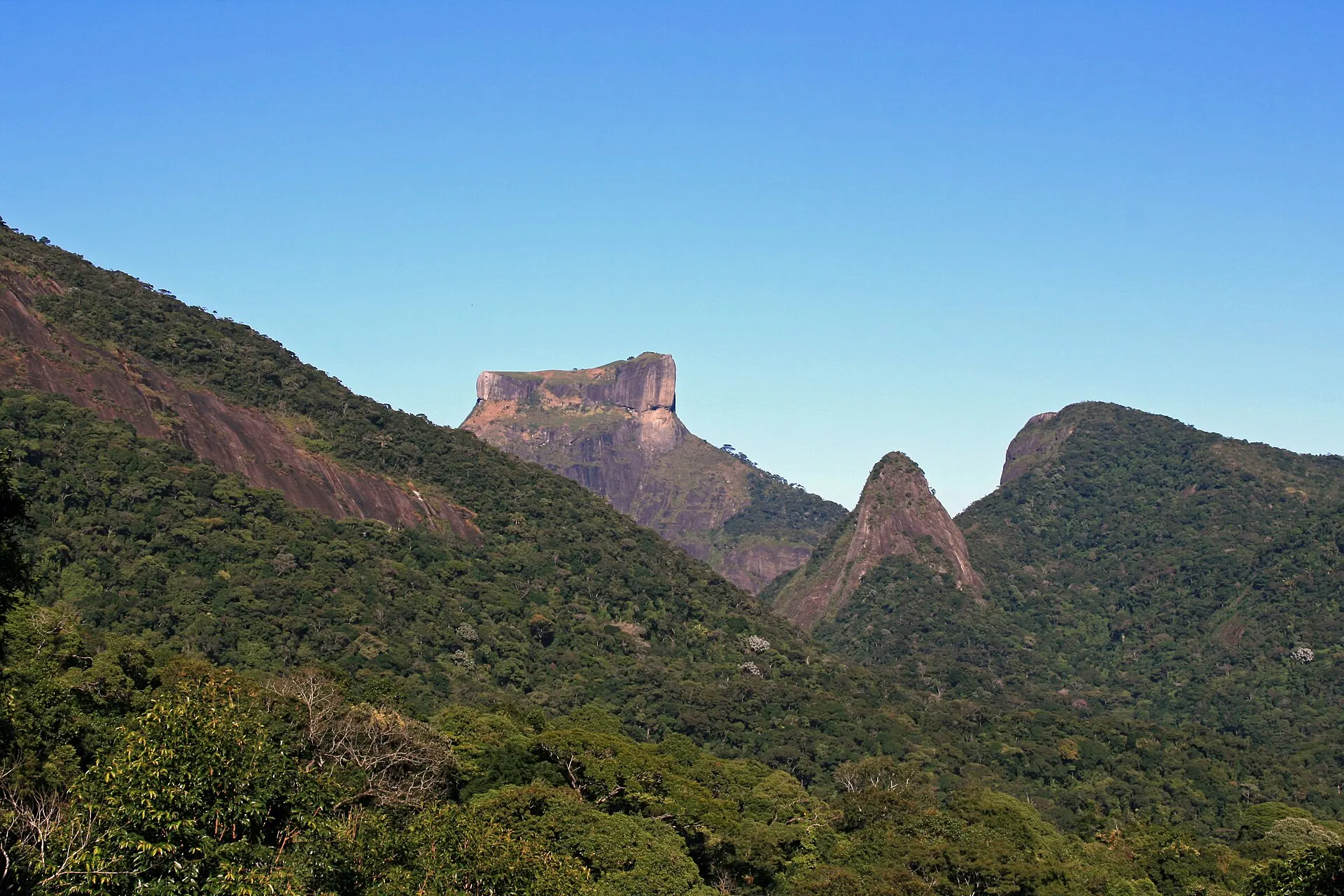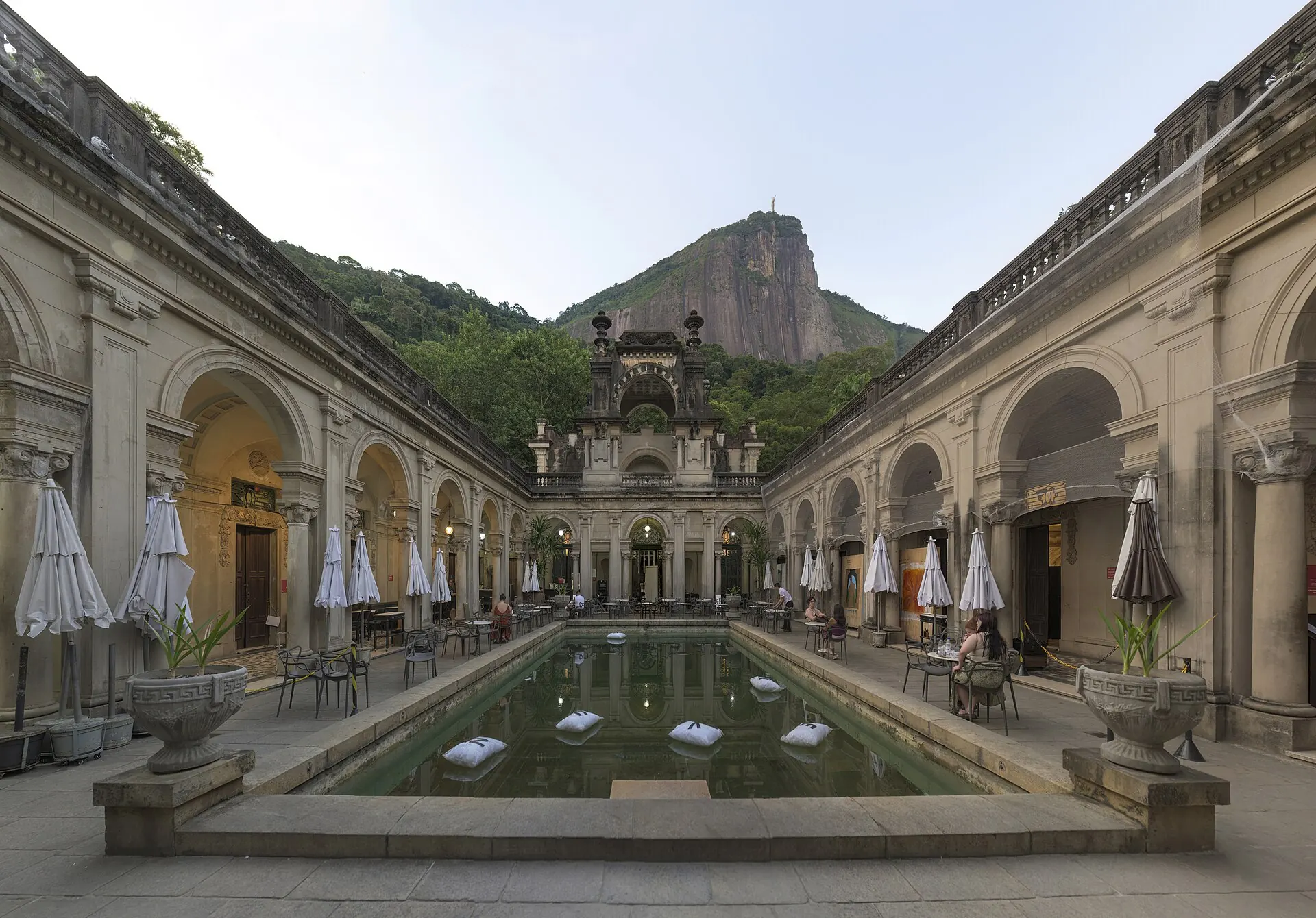
Rio's Jardim Botânico was founded in 1808 by the prince regent Dom João and spreads over 54 hectares of cultivated garden below Corcovado, with an avenue of royal palms, glasshouses of orchids and bromeliads, a lake of giant water lilies and the remains of a royal gunpowder factory. Along the same street, Parque Lage adds a romantic 19th-century garden and the trailhead for Christ the Redeemer, and the lagoon, Lagoa Rodrigo de Freitas, is a short walk away. From Copacabana it's about 20 minutes by taxi. Here's how to spend two hours in the garden, the ticket prices, and how to add Parque Lage and the lagoon.
- Where
- Main gate at Rua Jardim Botânico 1008, Jardim Botânico
- From Copacabana
- Around 20 minutes by taxi (outside rush hour), or bus 538 from Leme
- Tickets
- R$ 80 for foreign visitors, R$ 40 for Brazil residents in 2026; under-5s free
- Hours
- Usually Thursday to Tuesday 8 am to 5 pm; Wednesday 11 am to 5 pm
- Time needed
- Two hours; half a day with Parque Lage
- Founded
- 13 June 1808
The garden's story
On 13 June 1808 the prince regent Dom João ordered the lands of the Lagoa Rodrigo de Freitas taken over for a gunpowder factory, with a garden beside it to acclimatise plants brought from other parts of the world. The factory was destroyed by an explosion in 1831, and its stone walls survive, with the grand gateway and the coat of arms of the Portuguese Crown. One of its production units, the Casa dos Pilões, was restored from 1984 and opened to visitors in 1994 as a museum and archaeological site.
The garden grew into a scientific institution. Frei Leandro do Sacramento, who ran it from 1824 until his death in 1829, taught botany to the public, and João Barbosa Rodrigues directed it for almost 20 years from 1890. Iphan listed it as a national monument in 1938, UNESCO recognised it as a biosphere reserve in 1992, and it is part of Rio's UNESCO World Heritage listing for its Carioca landscapes between mountain and sea.
The royal palms and the Palma Mater
The garden's symbol is its avenue of imperial palms, Roystonea oleracea, laid out under Bernardo Serpa Brandão, who ran the garden until 1851. The story starts with one tree: in 1809 Dom João planted the first imperial palm, the Palma Mater. A legend says it first bore fruit in 1829 and that its seeds were sold, which is how the species spread across Brazil. The tallest palms on the avenue, which is named after João Barbosa Rodrigues, were planted in 1842 and the shortest in 1951, all of them descended from the Palma Mater.
The mother palm stood for 163 years. On 25 October 1972 lightning struck and killed it when it was 38.7 metres tall, and in 1973 the Palma Filia was planted from its seed to take its place. If palms are your thing, follow the self-guided Trilha das Palmeiras, 21 stops that take around 90 minutes.
Orchids, bromeliads and the glasshouses
The orchid house and the bromeliad house hold mostly Brazilian species; the bromeliad house opened in 1996 as the Estufa Roberto Burle Marx. The house of insect-eating plants is one of the garden's oldest buildings and received its first seedlings in 1935, and the cactus house, a set of small greenhouses of cacti and succulents, was first organised by the botanist Carlos Toledo Rizzini in the mid-20th century.
Outside, the Lago Frei Leandro is also known as the lake of the Victoria water lilies, for its Victoria amazonica, whose flowers start to open in the afternoon. The Japanese Garden began in 1935 with about 65 seedlings of plants typical of Japan and was reopened by Princess Sayako in November 1995. Look out too for the Chafariz Central, a fountain by Herbert W. Hogg with four muses, and for Mestre Valentim's Eco and Narciso, made in 1783 and the first metal sculptures cast in Brazil.
What to see in two hours
Two hours covers the highlights at an easy pace. A route that works:
- Enter at Rua Jardim Botânico 1008 and walk the avenue of royal palms.
- Find the Lago Frei Leandro and its water lilies.
- Visit the orchid house, the bromeliad house and the insect-eating plants.
- Cross to the Japanese Garden.
- Finish at the gateway of the old gunpowder factory and the Casa dos Pilões.
If you'd rather follow a theme, the garden publishes 16 self-guided trails, from the Trilha das Palmeiras to the Trilha Histórica, 78 stops in about two and a half hours. Guided Trilha Histórica walks leave at 10 am and 2 pm every day except Friday (only at 2 pm on Wednesdays) for about R$ 26 a person on top of entry, and on Fridays the themed walks at 10 am and 2 pm are free. There are also guided night walks, 90 minutes long, for about R$ 66. For tired legs, the shared electric cart goes stop to stop every 15 minutes for about R$ 39 a person, paid in cash at the ticket office.
Tickets and opening hours
- Tickets: R$ 80 for foreign visitors and R$ 40 for residents of Brazil in 2026; under-5s go free, and over-60s pay half with an ID document. Check the current price.
- Paying: the ticket offices take only PIX and cash, so if you don't have a Brazilian PIX account, buy online by credit card before you go.
- Garden hours: usually Thursday to Tuesday from 8 am to 5 pm, and Wednesday from 11 am to 5 pm, after the morning maintenance.
- Museum: the Museu do Jardim Botânico keeps 10 am to 6 pm hours (last entry 5 pm) and closes on Wednesdays. It and the Casa Pacheco Leão are free with a ticket booked online.
- Holidays: the garden opens from 8 am to 2 pm on 24 and 31 December and closes on 25 December and 1 January.
Parque Lage next door
Along the same street, at Rua Jardim Botânico 414, Parque Lage is part of Tijuca National Park and listed by Iphan for its history and landscape. It began as a colonial sugar mill. Rodrigo de Freitas Mello e Castro took over the farm by the lagoon in 1811, and in 1840 the English landscaper John Tyndale remodelled the grounds in the spirit of an English romantic park. Antônio Martins Lage bought the estate in 1859, and in the 1920s his grandson Henrique Lage remodelled it in an eclectic style for his wife, an Italian opera singer. In 1960 the whole property was expropriated and became a public park, and in 1975 the Escola de Artes Visuais was created there.
The gardens, the lake, the bandstand and the grotto stayed open when the mansion closed in May 2025 for a restoration by the state government, along with its restaurant and shop. The work is uncovering the original paintings on its walls and ceilings; so check whether the mansion has reopened before planning a look inside. Among the estate's remains is the Lavanderia dos Escravizados, the laundry that recalls the people enslaved there. The trail to Christ the Redeemer starts in the park, and walkers must set off by 3 pm.
The lagoon loop
From the garden's main gate it's about a ten-minute walk to the Lagoa Rodrigo de Freitas, and a loop of the lagoon on foot or by bike rounds off the day. Bike-share stations stand near the garden, on the corner of Rua Jardim Botânico and Rua Lopes Quintas and at Praça Santos Dumont. On the way round you pass the lagoon's two islands, Piraquê and Caiçaras, the rowing base of Clube de Regatas do Flamengo and green corners such as the Parque dos Patins and the Parque da Catacumba, with shady spots for a coconut water. For the view from above, the Vista Chinesa in Tijuca National Park looks down on the whole lagoon, and our guide to Rio's viewpoints lists more lookouts.
Getting there from Copacabana
Outside rush hour, the main gate at Rua Jardim Botânico 1008 is about 20 minutes away by taxi or ride app. Bus 538 runs from Leme, at the northern end of Copacabana, and buses 583 and 584 also stop at the garden. The main gate and the gate at Rua Pacheco Leão 101 have ticket offices open daily, the gate at Rua Jardim Botânico 920 sells tickets only at weekends and on holidays, and the Rua Pacheco Leão 915 gate is only for visitors who booked online. If you'd like a driver to link the garden with Parque Lage, Christ the Redeemer or dinner nearby, ask our concierge; our Michelin guide includes a restaurant in the neighbourhood. Back at the penthouse, the rooftop pool looks out over the Atlantic toward Sugarloaf; to plan your stay, contact us.
Questions
How much is a ticket to Rio's Botanical Garden?
In 2026 entry cost R$ 80 for foreign visitors and R$ 40 for residents of Brazil, with children up to 5 free and half price for visitors aged 60 and over. The ticket offices take only PIX and cash, so most visitors from abroad find it easier to buy online by credit card. Check the current price before you go.
When is the Jardim Botânico open?
The garden is usually open 8 am to 5 pm Thursday to Tuesday, and 11 am to 5 pm on Wednesdays, after morning maintenance. The Museu do Jardim Botânico closes on Wednesdays. On 24 and 31 December the garden opens from 8 am to 2 pm, and it closes on 25 December and 1 January.
How much time does the Botanical Garden take?
Two hours covers the avenue of royal palms, the water lily lake, the glasshouses and the Japanese Garden at an easy pace. Allow half a day if you add Parque Lage or a loop of the lagoon, or take one of the longer self-guided trails, which can take up to two and a half hours.
Is the Parque Lage mansion open?
The gardens, the lake, the bandstand and the grotto stayed open when the mansion closed in May 2025 for a restoration by the state government, along with its restaurant and shop, and the trail to Christ the Redeemer still starts in the park. Check whether the mansion has reopened before you plan a visit inside.
Which is the easiest way to reach the Botanical Garden from Copacabana?
A taxi or ride app to the main gate at Rua Jardim Botânico 1008 takes about 20 minutes outside rush hour. Bus 538 starts in Leme, the beach's northern end. If you booked online you can also use the gate at Rua Pacheco Leão 915; the other gates have ticket offices.
Sources
- Jardim Botânico do Rio de Janeiro: history
- Jardim Botânico do Rio de Janeiro: history (English)
- Jardim Botânico do Rio de Janeiro: chronology
- Jardim Botânico do Rio de Janeiro: Conhecendo nosso jardim, 3rd edition (2010)
- Jardim Botânico do Rio de Janeiro: opening hours
- Jardim Botânico do Rio de Janeiro: tickets
- Jardim Botânico do Rio de Janeiro: how to get there
- Jardim Botânico do Rio de Janeiro: electric carts
- Jardim Botânico do Rio de Janeiro: guided and themed visits
- Parque Nacional da Tijuca: Parque Lage
- Parque Nacional da Tijuca: Parque Lage to Corcovado trails
- Escola de Artes Visuais do Parque Lage
- Panrotas: Parque Lage mansion closed for works (12 June 2025)
- BandNews FM: state government advances Parque Lage restoration (8 October 2025)
- SBT News: cycling at the Lagoa Rodrigo de Freitas (19 May 2023)
- UNESCO World Heritage Centre: Rio de Janeiro, Carioca Landscapes between the Mountain and the Sea